A new series in which the ordinary people driving the rise of plant-based living tell us how it is for them

Everyday Vegans


This is the first post in an occasional series – to which we would welcome any contributions – about everyday vegans; the ordinary people driving the current wave of enthusiasm for a plant-based diet.

What leads people to choose this path and what are their experiences of living in an omnivore world?

For many of us, going vegan changes the way we look at the world and the people around us. I vividly remember the total disconnection from society that I felt during my first shopping trips after changing from a lifetime of vegetarianism to a vegan diet. As I wandered round looking at the lists of ingredients on potential purchases, it sometimes seemed like everything contained whey or milk powder. I suddently felt like a stranger in the shops I’d spent my life buying from.

So how is it for other vegans? Is there always a eureka moment, or for some people is it a gentle drift into a plant-based diet? What’s it like living in a non-vegan household – not something I’ve had to face, but for some people this can be a massive issue? Do we naturally have more in common with fellow herbivores? Do we really try and convert everyone we meet, or blurt out the word “vegan” within the first five minutes of encountering anyone new?

Alex Williams

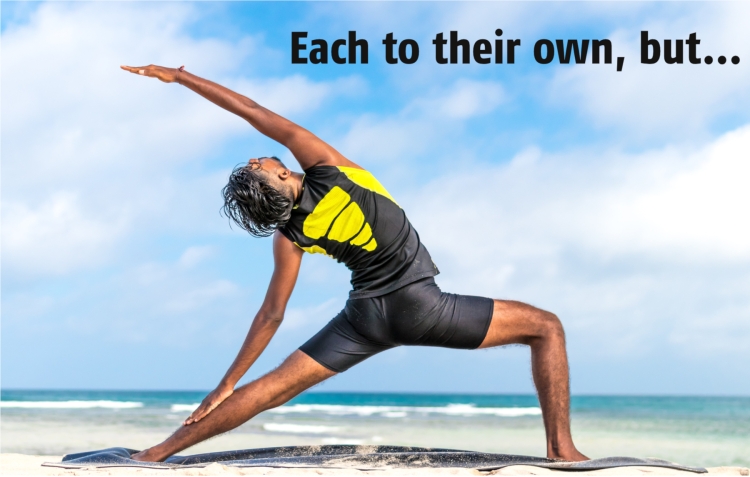
Artist Alex, above, was the first to respond to my internet plea for volunteers to kick off our new series. Here’s his take on being an everday vegan.

I’m a 36 years old male, born in Jamaica. I’ve lived in Barbados and the Bahamas and am currently living in south Florida.

In my work I mainly paint colourful pictures of fish; I’m a surfer and love the sea.

I became vegan 12 years ago and am the only vegan in my family. I do activist work with Anonymous for the Voiceless and also I also participate in protests.

I think the best way to help someone become a vegan is to share the horrific videos of the meat industry. I know that having seen these films myself, I will never go back to eating meat.

I think everyone will be vegan in the future – maybe in the next 30 years from now that will happen. I eat very healthily – mostly non-GMO and organic foods, and I shop at a place called Nutrition Smart. Avocados, quinoa and lentils form the basis of my diet.

I live with my girlfriend, who is also vegan; she became vegan after meeting me. I became vegan after watching the horrific videos on YouTube of the meat industry.

I believe that most people don’t see a problem with eating meat because they are conditioned to eat meat because of society and all of the meat commercials on TV making it look okay. But it’s not.

You can find more about Alex at his website.

If you are interested in sharing your thoughts in our Everyday Vegans slot, please get in touch and we’ll let you know what to do.

An interview with Dr Anthony Hadj: why a whole-food, plant-based diet is best for our health and the planet

Dr Anthony HadjThe food we eat has long been used to prevent and manage health problems, and now there is a growing movement of medical people who believe wholefood, plant-based diets not only prevent but can sometimes reverse a lot of the chronic illnesses associated with western lifestyles. They believe a change of diet can treat ailments such as type 2 diabetes and heart disease as well as, if not better than, daily drugs that control symptoms rather than offer a cure.

We spoke to Dr Anthony Hadj, pictured, a vegan GP with a special interest in management of chronic diseases (eg obesity, type 2 diabetes, hypertension, heart disease) using a combination of modern medicine and nutrition/education. The Australian medic is passionate about the subject and spends some of his time promoting veganism as the best choice for a healthy lifestyle.

You’re clearly 100 per cent sold on the benefits of plant-based diets. I’m interested in your own path as a medical practitioner to that conclusion; at what point in your practise/training did the power of a vegan diet start to become clear to you?
I have always had a strong interest in animal welfare and, like many, loved animals. In 2013 I began to realise the horrific practices that occur in the animal agriculture industry and I made the conscious decision to be vegan from then on. There was a video that Paul McCartney made called Glass Walls, which had a strong impact on me. As I explored veganism, I was made aware of medical practitioners like Dr John McDougall, Dr Caldwell Esselstyn and Neal Barnard and the work they were doing with nutrition and disease. I was amazed that diet could play such a large role in not only the causation but cure of disease. From then on, I chose to include it in my practice and encourage many people to pursue this.

Did the notion of a strong link between nutrition and illness always make sense to you?
It didn’t become clear until I researched and understood the science. That was in 2013/14. Once I started to read the pioneering studies from people like Dean Ornish who were able to reverse our number one killer, heart disease, I was sold on the power of plant-based nutrition.

What we put into our bodies has always been linked to certain ailments. Having seen the benefits first hand in your patients over a number of years, you now have your own experience to draw on when it comes to using nutrition to cure western society ailments like diabetes type 2 and hypertension. What research/studies did you initially consult to guide you into your current thinking?
I read the book The Starch Solution, by John McDougall. He brilliantly covers the science of plant-based health and references many papers through his book. The pioneering studies from Dean Ornish and Caldwell Esselstyn that showed a radiographical reversal of heart disease were very convincing. The Physicians’ Committee for Responsible Medicine website also has a great deal of links to studies that have shown the impact plant-based health has in treating type 2 diabetes.

Do your patients always follow your ‘go to the fruit and veg section of the supermarket’ prescription? Would some just prefer to take the tablet and eat the cheese?
Many patients of mine are very keen to follow the prescription. They are often seeing me because they have had a ‘wake-up call’ or a diagnosis that is life changing – heart disease, mini heart attack/stroke, diabetes etc. It’s at this point that many feel incapacitated but also energised to do whatever they can. When you are able to showcase the power of plant-based nutrition to them, it is very enticing. Many patients are prepared to do whatever it takes to live longer. Some people do just prefer a tablet and cheese; however, even with these patients, I have noticed that they do come around eventually.

How could I, a layperson, explain simply to a fellow layperson what the health benefits of a plant-based diet are?
Consuming plants is our natural diet. We are designed to eat plants and specifically carbohydrates. Many large civilizations have spread and prospered because of starchy (high complex carbohydrate) foods. We have a lot of evidence that populations who are mostly plant based live the longest and happiest of all. It is now beyond doubt that consuming a whole foods, plant-based diet lowers blood pressure, heart disease risk and keeps us trim and healthy looking. Websites like the John MacDougall’s, plus the Physicians Committee for Responsible Medicine and NutritionFacts.org provide a great place for people to start.

Do you believe that the meat and dairy industries are now involved in a collusion to keep the health benefits of not eating their produce quiet which rivals that of, for example, the tobacco industry in the 1960s (and potentially the alcohol industry, though that’s another story entirely)?
I don’t think there is a collusion or conspiracy. I do believe that it is just about money. They are seeing a movement like veganism take root and thrive, and it is a threat to their bottom line. They will always be able to find a study that supports their work; however, it is almost impossible to suppress the benefits of this programme. They use mass marketing to try and keep the public confused.

You’ve been vegan for three years. Before that what was your own diet like?
My diet was very poor, with a preference for high-fat foods of an animal nature.

How would you counter the suggestion that plant-based is the current fad. I grew up in the 70s and saw my mother try high fibre, low fat, high fat and highly restrictive calorie-controlled diets among others, all in the space of a decade. What makes this different?
It is a very sustainable diet. We will feel full when we consume a vegan diet (generally) because it is high in fibre. We thrive and feel better because it is a diet focused around antioxidants, macro/micro nutrients that helps to keep our body healthy and well. Many fad diets in the past have failed Continue reading “An interview with Dr Anthony Hadj: why a whole-food, plant-based diet is best for our health and the planet”

Reverse-engineering the urge to get drunk: an interview with This Naked Mind’s Annie Grace

annie2I’m supremely grateful to be nearly six years sober now; truly feels like I’ve been given the opportunity to have a second crack at my life, having come this close to screwing it all up. I started the process of recovery in Alcoholics Anonymous and will always have a place for it in my heart, but over the years I’ve related to it less and rarely attend meetings now.

My medicine is primarily yoga and meditation, but I am also inspired in my sobriety by works such as This Naked Mind by Annie Grace (pictured). It’s a powerful book that has had a profound effect on many people concerned about their drinking. A highly simplified summary of its message is that alcohol is a poison that we’re culturally programmed from a very young age to believe is a route to good times, something we often keep believing even as it becomes obvious that it’s not true. Its approach to reverse-engineering this programming is scientific and undogmatic, with lots of good information about what alcohol does to the body, and helped to free me from the slightly fatalistic outlook of AA.

If you’re interested in what This Naked Mind is all about and have even the slightest unease about your drinking – I regularly hear “healthy” drinkers saying “I sometimes think I should drink a bit less” – I’d highly recommend reading it. If you want to learn a little more and don’t want to read the book, you could do worse than listen to this excellent interview with Annie on The Grind podcast.

I also fired off a few questions to her in an email, and here’s what she sent back…

So what’s your take on AA these days? I think AA has an important place, especially as the support is daily and live. But I also don’t believe it is for everyone. My work focuses on the 90 per cent of drinkers who are not physically addicted, while I think AA focuses more on drinkers who have a physical addiction to alcohol.

What do you make of the word alcoholic? Do you think there are things that “qualify” you as an alcoholic or is it simply a definition one takes on oneself?  As far as the term “alcoholic” goes, the importance lies in taking responsibility for your alcohol consumption. I have a wonderful video response on this you can watch here:

Are the companies that hawk booze any more moral than crack dealers? Why do you think they have such freedom to hawk their wares when there is so much information about the harms? Do you think they are scared about the prospect of losing business as awareness grows around what their drug does? These are very good questions, and ones I think you need to come to the conclusions for yourself. That being said, the alcohol industry has a powerful influence on us from a very young age, and the media pushes this agenda even more.

What would you say to anyone who has the slightest concern about their consumption of alcohol? I think it is very good to question your alcohol consumption – to reflect on what you are drinking, how much, and truly why you are. The Alcohol Experiment [Annie’s new book] is a great place to start to give yourself 30 days alcohol free, along with some amazing information about alcohol and its effects on the body.

How do you feel about having had such a strong impact on so many lives around the world? What do your loved ones think about your mission? I am passionate about bringing my message forward and sharing all the information I have found on alcohol. My family is very supportive and understanding.

Do you ever worry about your kids growing up as drinkers? Have you been educating them about alcohol from a young age? I talk with my children honestly about my experiences and what alcohol truly is and can do. I hope that me sharing my truth with them they will be able to make the right decision for their life when they are older.

You have a new book coming out… What’s it about? Is it a follow-up to This Naked Mind? Would it be a worthwhile read for those who have already benefited from This Naked Mind? Thank you so much for asking – my new book is The Alcohol Experiment. I think it is a great addition to This Naked Mind and certainly worth reading.

For more information, including an online community discussing drinking and associated issues, visit thisnakedmind.com

Functional foot yoga that anyone can do (and so much better for you than Instagram-friendly contortionism)

Foot yoga

Here’s a tasty little movement practice that you can incorporate into a yoga or Pilates session, or simply use as a standalone practice even you’ve never done, or plan to do, a single moment of yoga or Pilates. It’ll bring you a lot more functional benefit – ie, helps you in your everyday life – than any “journey” towards an extreme backbend, contortion or headstand etc.

Stand barefoot, take a few slow, deep breaths, take a few moments to feel how your feet feel – really feel, don’t analyse – then scan slowly up through your legs, same thing, just noticing how you feel. Now lift all ten toes off the floor, spread them as wide as you can, hold for a few seconds and notice everything – physical sensations from the feet rippling up through the legs and higher into the body, also mental reactions. Release, relax, stand with no particular engagement in the feet. Notice the contrast with the toes-up experience.

Now press the pads of your toes more strongly into the ground. Hold for a few seconds and feel what you feel, all the way up from the feet. Release. Feel the contrast. Now lift each big toe individually while leaving the four outer toes of each foot on the floor. Hold, feel, notice (this really is the heart of the practice). If it’s easy it’s easy; if it’s not, notice your reactions and smile. Stand neutral again. Observe. Now keep each big toe grounded while lifting the four outer toes of each foot. Hold, notice everything: physical sensations – maybe your hands are doing some interesting things – as well as mental reactions. Just notice. Neutral again, observe the contrast. Now go nuts… Keep the big toe and little toe of each foot grounded while you lift the three inner toes simultaneously. There’ll be plenty to observe here.

It doesn’t matter if your toes don’t do the things you’re asking them to do: simply by trying to do all this stuff, you’ll be activating neural pathways that may have grown rusty through years of shoe wearing; you’ll be engaging muscles and tendons in the feet and legs that may be underused; you’ll be able to look your ego in the eye, maybe laugh a lot; you’ll be more grounded. Do each exercise once, do each one a few times; doesn’t matter, just use whatever time you have – three minutes while waiting for the kettle is fine, longer is fine too.

A baffled cat and yoga mat are not obligatory.


It’s only by speaking up that we’ll drag companies into the vegan future

virgin train

What started life as an article ranting about a recent train trip from London to Edinburgh, and the different attitudes of the two train companies I travelled with – Virgin and CrossCountry – has become a piece about the power of the vegan voice, and why we must not just speak up, but positively yell.

I’m at an age and a stage where I can unapologetically afford the odd treat, so I went first class, which comes with complimentary food service for all passengers. Let’s face it, at the price we are talking about, complimentary really means ‘included in the cost’.

I’m the kind of vegan who really appreciates effort. I get that I live in a world in which I am currently in the extreme minority and I really value the efforts of others to accommodate me – often to the point where intention and thought matter more to me than results. I really appreciate it, for example, when I go to dinner with omnivore friends and they choose a place that is, at the very least, vegan friendly, rather than a steakhouse. The actual taste, the quality, the food on offer is secondary to me; what matters most is knowing that I’m included.

And so the Virgin experience from London to York is a delight: a bit of thought is applied to its snacks, the menu when I travelled featured both a vegan breakfast hash (sautéed potato with mushrooms, greens and slices of tomato, bean and pesto sausage) and a Mexican burrito (mixed roasted peppers and onions, with beans, rice, salsa and vegan mozzarella cheese, served warm in a tortilla wrap).

Cross Country vegan meals tweetBy contrast, CrossCountry, with which I travelled the remaining distance, was not so accommodating. There was nothing for me at all on its trolley apart from a bag of ready-salted crisps. There wasn’t even a piece of fruit, and so I tweeted to find out the thinking behind this. The response was a pleasant enough brush-off, saying my comments would be passed on. I heard nothing further, so emailed the company directly. Again, I received what I perceived as a brush-off response.

In finding links to accompany this article, I checked the CrossCountry website

And there it is, just three weeks later – Vegetable Biryani is on the hot meals menu: an Indian speciality of light vegetables in a fragrant curry sauce, topped with rice and served with a chickpea ratatouille. Suitable for vegetarians and vegans.

So hats off to CrossCountry for listening. I’m not suggesting my voice alone did the job, but it was a pleasant coincidence that this change happened so soon after I’d spoken up.

In an age where plane menus – often the topic of vegan chats on Facebook, Instagram and the like – are increasingly tailored towards all of their customers, including vegans, it’s time for other transport companies to follow suit. And it’s up to us to pester them into doing so.

An awkward compromise for vegan cat owners: the pet meat industry

cats eating

I’m a vegan with four cats. Every morning, one of the first tasks of my day is a gruesome one, as I rip open pouches of meat and squeeze them into bowls; every morning I go against everything I believe in, every principle by which I live the rest of my life, and I do my bit to support the meat industry.

To be clear, I’ve lived with cats my whole life. These animals – Heisenberg, Schrödinger, Luna and Huxley – are two pairs of siblings, and all came from a local cat rescue shelter, and all have joined us since I became vegan. This is one of the great hypocrisies of my life perhaps, but, like all of us, I try the best I can and this is my compromise.

Periodically I google cats and vegan cat foods, and it’s clear that, just like the human rise in plant-based diets has risen dramatically of late, so has the demand for pet foods that support this way of life. The number of dog and cat foods commercially available on the market is growing rapidly and it’s clear that dogs, natural omnivores, can thrive without meat. But cats? Ploughing through the masses of information on the web, it seems that some cats can go vegan, whereas for others it simply makes them ill over a longer period of time.

Taurine – an amino sulfonic acid, often referred to as an amino acid, and a chemical that is a required building block of protein – is the word that frequently gets hurled about in this debate. We make it; cats need it. And they need it, so it seems, in the quantities found only in meat and fish. Whether vegan diets make cats sick through lack of taurine literally appears to be the luck of the draw.

I’m constantly hunting to find out more about this topic and what greater source of consumer opinion could feasibly exist than the internet. I’m a great fan of reddit (think animal forums and kitty photos) and so I threw the cat somewhat among the pigeons by asking for views around this topic on the two groups which truly have a vested interest in this question: the cat forum and the vegan forum.

I phrased the question slightly differently for each audience, but in each case I was quite open and clear about my own current pet food choices. I expected my karma (the points system which amount to a review of your contributions on the site) to drop at first, and this was pretty much spot on. For the first few hours it plummeted as the kneejerk down voting kicked in. But then people started to actually read what I was saying and two decent debates followed. What became very quickly clear is that no-one is sitting on the fence in this matter.

Unless labelled as Bardo Burner (BB), the posts are all from other users.

Posted in the ‘cat’ forum:

I’m a vegan interested in knowing what cat owners think about vegan cats. For the record, my cats are carnivores and I feed them meat, but these products exist.

1. NO. NEVER. Cats are obligate carnivores.

2. Cats have to eat meat. A vegan diet will eventually kill them, and it will be a slow horrible death too. Don’t do it.

3. Here’s a WebMD piece on vegetarian dog and cat food which looks pretty good. My impression is that there are people selling vegan cat food as a racket, charging absurdly high prices for malnutrition. Anyone who deprives a cat of proper nutrition has no business claiming to be “compassionate.” (And I understand that’s not what you’re doing. Some people on Reddit hate anyone who even asks questions on taboo topics.)

4. Totally agree

5. Not all products that exist and are available are safe for pets. For example sand being sold for pet lizards is usually deadly but if you ask a pet store employee they will happily recommend it as a substrate. You don’t even need to feed your cats raw meat if you don’t want to but keep giving them normal cat food that’s meant for cats. I’m not sure why this would be a problem since I’d assume vegan cat food and normal cat food probably look the same so you shouldn’t feel disgusted or something by giving it to your cats.

6. If you wanted your pet to be vegan then you should not have a carnivore for a pet. Get a rabbit or something. Not fair to the cat.

7. (BB) I’ve got four and I don’t feed them lettuce, I assure you. Can imagine their disdain if I tried. To be clear, I have no intention of making my cats vegan. Purely came across the cat food and interested to hear your views.

8. Whoever invented these products is fucking retarded. Cats can become very ill by eating like that, the thing is that cats will not show you when they feel weak and sick. So by the time you realise Continue reading “An awkward compromise for vegan cat owners: the pet meat industry”

The Birds is a perfect nest for peckish vegans in Leytonstone

Vegan meal, The Birds, Leytonstone

What a glorious find The Birds pub on Leytonstone High Road is. The menu is mainly vegan and it’s ridiculously cheap to craft a good meal.

Between two of us we had the chickenish popcorn with garlic mayo, salt and pepper tempura cauliflower, and a macncheese each, all for under £15, plus two pints of lime and soda and a vegan ‘Snickers’ to share, which came in at less than a fiver.

Vegan dessert, The Birds, Leytonstone

We went earlyish on a Thursday night, and this E11 pub – the name of which is a nod to Leytonstone’s most famous son, Alfred Hitchcock – was quiet, though I’m guessing weekends are a different story.

Loved the food, but, honestly my favourite bit was the gentle birdsong piped into the ladies toilet.


The highs and lows of afternoon tea and cake at Shakespeare’s Globe

Vegan cake stand at the Swan, Shakespeare's Globe, London

When I can, I steer clear of omnivore eating establishments, but something about an afternoon at the Swan, a pub and restaurant attached to the Globe theatre in London, appealed to my latent luvvie.

Having booked a vegan tea, there was no problem when I arrived, and even the included cocktail, which normally contains honey, had been changed to accommodate me.

Cocktail at the Swan, Shakespeare's Globe, LondonThe initial waiter bent over backwards to make me feel special, which was appreciated; to me, afternoon tea is always as much about the gloss as about the taste. No disappointments on that front as my food arrived, along with my pot of oolong, looking suitable pretty and colourful. Mine looked every bit as well prepared as my omnivore companions’ cake stand.

It felt as though a lot of thought had gone into the sandwiches, which were dainty and filled with combinations of roasted peppers, vegan mayo and cheese, smidgens of cress and thinly chopped cucumber.

After that, it went downhill. The scones were dry and actually quite unpleasant to eat, and, though two of the chocolate-based cakes were delicious, the small glass containing a hefty blob of jam sprinkled with muesli was a real lowlight.

I’m going to give this experience a silver star for effort but, at £40, they really do need to try harder with the sweet stuff.

2,500 to 10,000 in two years: growth of veganism reflected in annual march

Karen was one of the estimated 10,000 protesters at this year’s Animal Rights March in London. Here, she reflects on its growth over the past two years and its contribution to highlighting the cruelty of killing animals to gratify human consumption

Animal Rights March, London 2018

Last year I joined 5,000 vegans on the Animal Rights March across London, an emotive annual event founded by the UK animal rights organisation Surge. At the first such event in 2016, the number of people protesting against animal cruelty of all kinds had been half that, at 2,500.

As a vegan for three years, and vegetarian for more than 40, last year’s march was a powerful and uplifting experience for me. I’d gone alone, I didn’t make new friends or spend time chatting, and I was anxious as hell before the event, with no idea what to expect. But from the moment I arrived I was part of something impassioned and heart-warming that simply felt right.

What overcame my nervous, lazy side was the notion of being a voice for the voiceless, and once there I was swept along and inspired by the slogans, banners and chants; and as a result of the speeches at the end, I left determined to become part of a wider vegan community.

And so it seemed inevitable that I’d be there again this year, and all the positive changes I’d seen over the past 12 months – a rapidly growing acceptance of veganism as a way of life, articles in the mainstream media, plus tons of cash being pumped into plant-based merchandise – made me suspect it’d be a much bigger affair.

As we gathered at Millbank on Saturday (August 25) I was aware that the crowd – people of all ages – felt bigger, but it was only as the march rolled out on to the streets near Westminster that it became obvious just how many of us there were. Later that night the figures were confirmed: 10,000 people had taken part, and once again participant numbers had doubled.

I’m delighted, humbled and honoured to have been part of the protest, but added to this is the shame that I live in a society that condones horrific acts of violence against millions of our fellow Earth creatures every day.  The posters and placards around me on the rally reminded powerfully me of the enormity of this brutality – I often forget the details. as I come from and live with a family for whom eating dead animals was never really an option.

The two marches I’ve attended have been deeply emotional experiences for me – on the one hand, there is pride and a sense of belonging at being in so like-minded a crowd; on the other, crushing sadness at the reality of the wider society around me and the practices it accepts as normal when it comes to taste buds. These issues are highlighted when the march passes eating establishments that serve carcasses of dead creatures as a matter of course.

You need to experience the uplifting vibe of the marches to truly appreciate their power, but here are a few shots I took on the day in the hope of conveying something of what it feels like to be there.

A vegan stalwart, one of the hidden gems of Porthmadog

vegoniaI’m just back from a road trip through Wales with my family, all three of us vegan. Having learnt from experience – a recent similar venture through the East of Scotland – we decided we had three choices when it came to food: spend our days glued to the Happy Cow app, with hunting as a primary focus of each day; take whatever food presented itself (the approach we took in Scotland, which we knew to be a hit-and-miss, often grim, choice); or go Airbnb and self cater.

At this point, let me clarify – I’m not saying it’s impossible to get food in these countries – I know there are many great places if you do your research or stick to cities – but we were going off-grid a little and wanted to make good food part of our journey, and not a central focus.

We plumped for self-catering – a wise move, which meant we spent less money and expended less energy searching for suitable places to eat. That said, I kept a close eye on the web, just in case we missed one of those lucky vegan finds; one such place was Vegonia Wholefoods in Porthmadog.

This independent vegan and vegetarian wholefood store carries over 3,000 lines including chilled, frozen and ambient foods, organic, gluten free, pet and baby foods, hot and cold drinks, vitamins, minerals, remedies, toiletries, household cleaning, and home brew products. I know this because I’ve done my web research, but that’s pretty much all there is about this place on the internet.

Slap bang in the middle of this small town in North Wales, Vegonia started up over 20 years ago, and though it’s listed in all the usual places, it has zero web presence of its own. There is no website, and only an automatically-generated Facebook page based on what users are interested in with no affiliation to the shop itself. And yet it has kept going since its opening in 1997.

In a world so often dominated by Holland & Barrett (and here’s a shout-out for that company’s own plans to become increasingly vegan-friendly soon), a long-standing independent shop, which has survived with virtually no internet presence while keeping so true to its original vision deserves a mention and a visit if you’re ever in the area.