123V Browns… roll on the plant-based sushi

Tucked away at the back of a fancy boutique on Brook Street, right next to Claridge’s hotel, 123V Browns is not a restaurant you could stumble across. I walked back-and-forth several times past this grand grade II listed building before plucking up the courage to knock – it’s the kind of intimidating clothes shop where the doors are personally unlocked for you to walk in – and ask if I could possibly be in the right place. ‘Ah, you’re here for the restaurant? ‘

You have to know it’s there to find it.
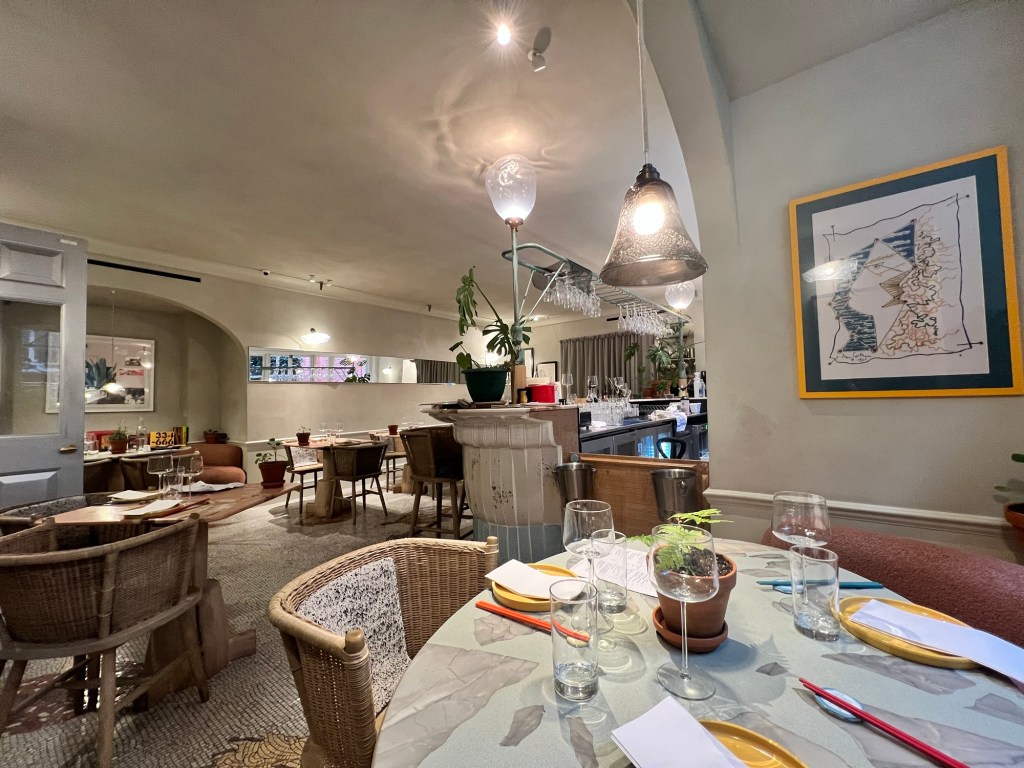
Behind the clothing and the sparse shoe displays: 123V Browns is a quirky cosy space

There are other meals on option, but the star of the show at this restaurant is the bottomless sushi. Although empty when we arrived at 2pm, the place quickly filled up. I was sitting close enough to the entrance to hear pretty much everyone ask the same question as they were greeted by the waitress: “Is the bottomless sushi deal on?”

That’s why I was there, with my two favourite companions, on a very cold and wet winter afternoon. In the milder months, there is a lovely garden in which you can sit, but this was a day when it felt good to be inside and snug.

The system itself was easily negotiated. If we wanted, and we did, we could start with one of everything, and then take it from there.

Bottomless sushi: as much crispy rice, Nigiri, California, Signature, and tacos as you can eat

The problem, and let me just say it straight out, was the time constraint: put simply, would we be able to eat enough in a two hour period, with service as slow as this initially appeared to be? Much of our mumbled conversation between courses revolved around this.
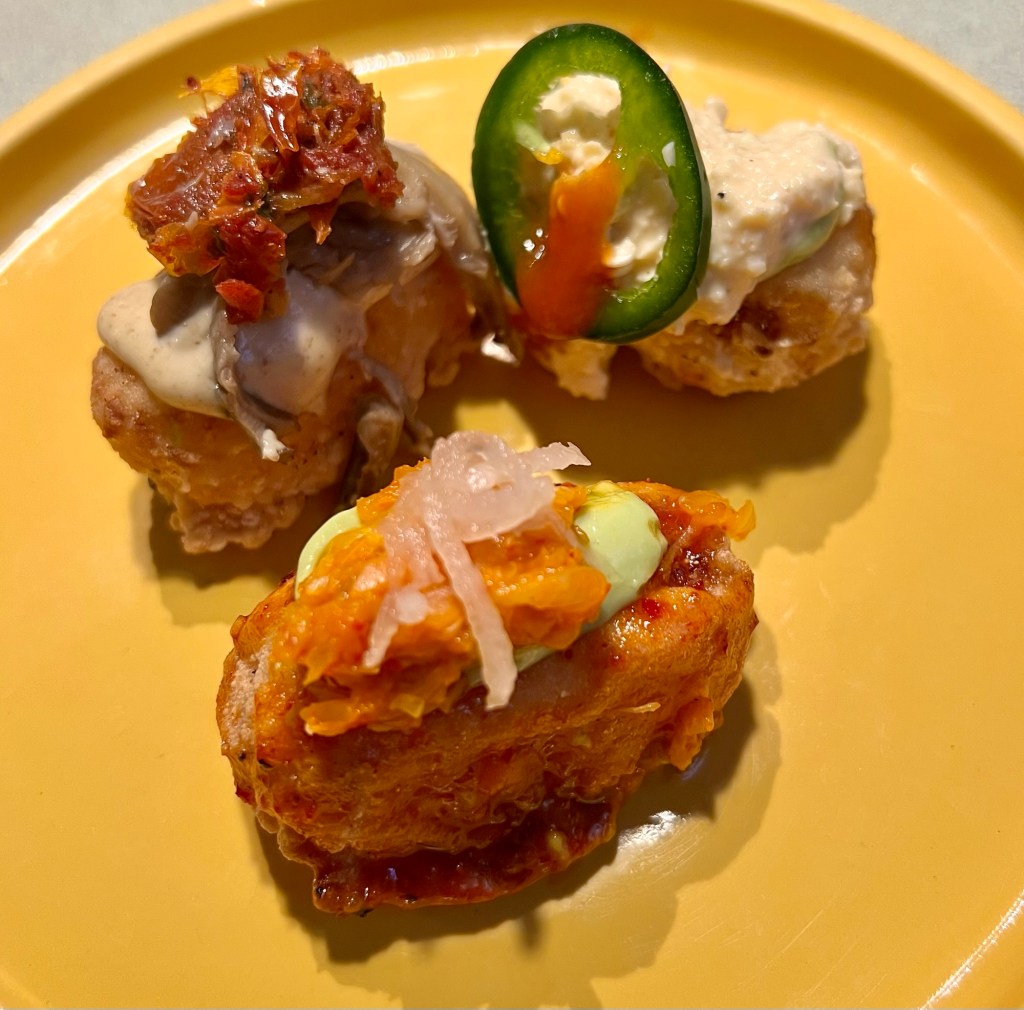
Crispy rice sushi: a crunchy little mouthful

First came the crispy rice sushi. I’ve never had this before, and they were among my favourites. Small ovals of crisply fried rice topped with, for example, tofu crab, miso aubergine, and black mushroom. The green dynamite, topped with a jalapeño was the biggest hit with us.

Nigiri: including the incredibly popular green velvet

And then we waited. And waited. And mumbled under our breaths about when our two hours might have been timed from, and whether they were growing the rice back in the kitchen before serving it up. The second dish took some time, it would be fair to say, and came into stages, but every single piece brought with it its own punch. The textures and flavours were amazing; from fresh and fragrant to umami rich, the food was excellent and frequently surprising. Sushi has never been at the top of my list when it comes to food, but this was an entirely taste-changing experience.

Vivid colours: pressed tapioca used to make ‘salmon’ and ‘tuna’
Nigiri: including a very ‘meaty’ 3-D plant flank and kelp cavier

And then the courses just kept coming. Each morsel saw us eagerly discussing what we might order when the entire menu had been tried.

The sushi tacos: ingenious little snacklets wrapped in seaweed

We finished a first dose of everything with half an hour to spare, and then, inevitably, over ordered. I’ll tell you now what our favourites were. We re-ordered the green dynamite, the green velvet, the Dragon roll, and the sushi tacos. Equally inevitably, we were left with about 10 pieces of sushi on the plate. It seemed logical to us that a place with the environmental ethics of any Alexis Gauthier restaurant would let us sneak a couple of bits of sushi out, rather than chuck them in the bin. So after a bit more mumbling, we sheepishly asked if we could have a little box to take away.

Absolutely not.

Out of sheer greed (and a touch of spite), we ate as much of what remained as we could fit in our already bloated stomachs, and pretty much waddled out. After we got over the initial indignation, it seemed pretty logical that bottomless sushi is a thing that you eat in rather than takeout. But hey, it was worth a try.
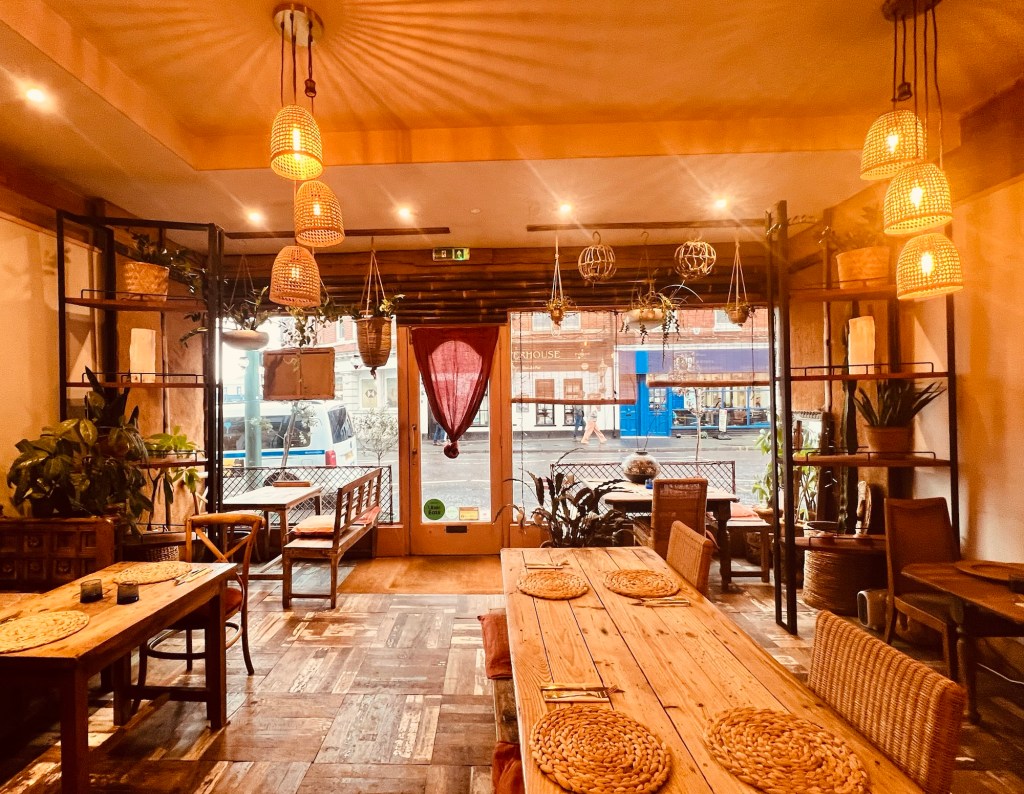
Bournemouth’s Dane and Port, where the menu changes daily, but the standards stay the same

Dane and Port: a wooden and woven rustic vibe

It’s a rainy day in Bournemouth in January. I’m not a fan of umbrellas, and the hood on my jacket serves more against wind than as a protection from water. As is frequently the case, I’ve got my iPhone clutched in my hand, and I’m following the HappyCow app to an interesting sounding vegan deli style restaurant with no menu to speak of. It’s 10:46am, I haven’t had breakfast yet, and this place is slightly off my beaten track, necessitating a bus journey, or the kind of walk I’m not prepared to do in the rain. I don’t have much of a clue what to expect, but I really need it to be good.

An abundance of plants: not a human in sight

When I walk into Dane and Port it’s cosy and dry, which is the first plus box ticked. It’s also empty of both staff and customers, and I am met by a low wall of Middle Eastern music with the mild aroma of exotic spices to match. I can’t quite place either precisely, but it instantly makes me feel at home. There are plants everywhere. Standing. Hanging. And the decor is wooden, woven, and rustic. With no humans in sight, I am unsure at first as to whether if it’s even open and I drift over to the back of the restaurant, hoping to find someone. Yes, there is a menu of sorts up on the wall, but revealing no specifics; there are simply vague references to meals like a brunch bowl or a sandwich plate. 

I call out and a waitress appears from behind a slight curtain at the back. She pops downstairs to fetch the owner who she assures me will be able to explain the system. This she does, and it basically amounts to there is a brunch bowl, and you say which of the feasible components appeal to you. 

A heavy teapot: from a selection of available teas

I choose an English breakfast tea to drink, which arrives in a heavy metal pot with enough contents for me to fill my beaker three times. My brunch plate consists of a dense chickpea flour tortilla, flavoured with turmeric, dill, and spinach, the beetroot humous, and a pickled red cabbage and broccoli salad. All of these smell and taste delicious, and, like everything served here, the foods are made from scratch on a daily basis.

The brunch bowl: a plate of freshly prepared wholefood

Owner, Isabel, comes over to check that I am okay and that the food is to my taste. It most definitely is. She is Portuguese, and her co-owner husband is from Denmark, which, she tells me, explains the shop’s name. She adds that they opened four years ago, just after the first lockdown, originally planning to run a vegan deli, and slowly expanding into a restaurant. Their focus is on keeping food as unprocessed, ethically produced, flavoursome, and as organic as possible, but without any preaching. All of this appeals to me massively. 

With many businesses in the café and restaurant trade closing down in the current economic climate, these are tough times; Dane and Port, which has never really advertised itself at all, has begun exploring ways to future proof itself as a business, Isabel explains. This might mean going back to its roots as a deli, and becoming more takeaway orientated, but whatever the case its ethics will remain the same.

And for those who like more than a doggy bag to take home, a wander downstairs reveals a range of organic veg on offer to buy. 

Organic veg: don’t leaf without a trip down to the basement

For now, if you can do without the thrill of choosing your meal online before you get to a place, it’s well worth the trip. Fully licensed, and serving organic cocktails and wines, they also serve cold pressed juices and artisan coffee, as well as desserts.

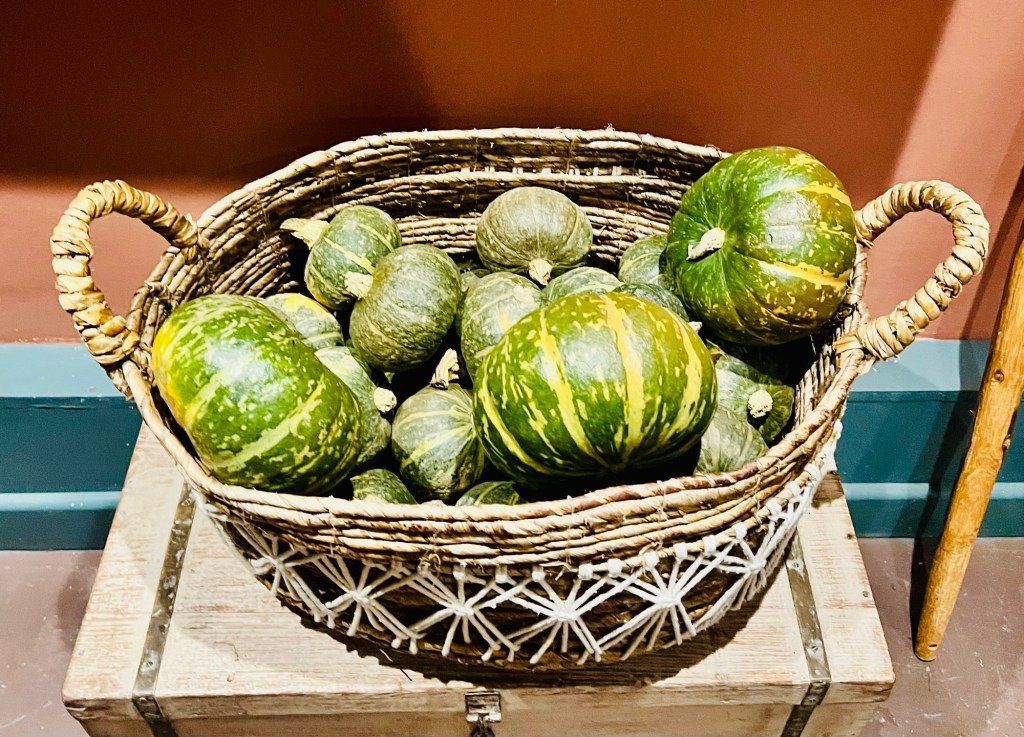
Pumpkins: not just for Halloween 

So long, and thanks for all the to-fish!

Vegan cocktails: Unity Diner offers both alcoholic and clean tipples

Update: having negotiated a deal with the landlords, Unity Diner has now reopened. 

News of a vegan restaurant taking the difficult decision to close its doors for the final time is always a body blow, with the most recently affected being Stem and Glory in Cambridge. But Unity Diner… truly, who saw that coming?

Unity Diner began in September 2018, and was formed by a group of activists, including vegan educator Earthling Ed, on a mission to make a positive impact on both the animals and on planet Earth. From day one, Unity Diner has been run as a not-for-profit restaurant, with all money going to Surge Sanctuary.

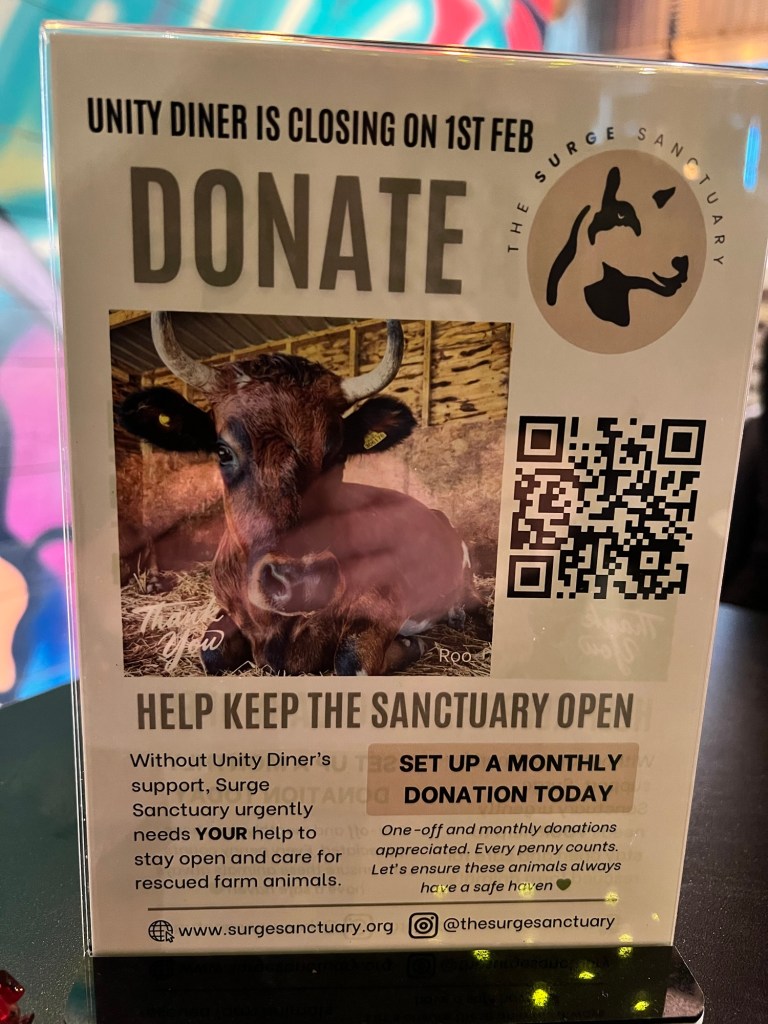
Help keep Surge sanctuary open: a haven for rescued farm animals

In January 2025 however, they emailed everyone on their mailing list to say: “Sadly, we’ve not been spared from the economic situation affecting the hospitality sector here in the UK, and with soaring costs since Covid and our landlords now wanting a rent increase this year, the time has come for us to call it a day.

“Restaurant closures are running at their highest level in more than a decade. A total of 1,409 shut their doors in the year ending September 2024, up from 1,180 in the 12 months before. The situation for hospitality in the UK at the moment is beyond anything we could have expected when we opened. We’re proud to have battled through it for so long. 

“However, although we share this news with heavy hearts, we are immensely proud of everything we’ve achieved over the last six years. We’ve served vegan meals to thousands of non-vegans and we’ve supported the sanctuary and the animals who live there.”

Simple scran: Bacon burger and triple-cooked fries with rosemary

Of course we booked one final visit straight away, and if you’re reading this before February 1st 2025, you still have time to do so yourself. As a place to eat, it has always been appealing to vegans and omnivores alike. With a friendly staff and a welcoming vibe, as well as their cooked from scratch soul food (much of which has ‘fishy’ names, like lobster mac and cheese, crispy prawn tempura, or the restaurant’s popular signature dish, tofish and chips) Unity Diner is a great place to hang out, and meet up with friends or family.

Crème Brûlée: dried rose petals make a fragrant garnish

Honestly, on previous visits we have rarely had room for dessert, but on this final occasion we made an exception. The crème brûlée is absolutely delightful; fragrant with vanilla, rich and creamy with a crunchy caramelised topping, it’s the ideal end to a meal. For one of our party who was absolutely stuffed to capacity after the umami-rich seared oyster mushrooms with kale crisps, a frothy matcha latte served the same function: a perfect finish to a poignant experience.

Matcha latte: a fitting end to a delicious meal when you simply can’t eat another crumb

It’s not a total end to the project though. Sister restaurant No Catch down on Brighton seafront offers a great excuse for a day at the seaside.

Carb your enthusiasm at London’s Pastan Barbican

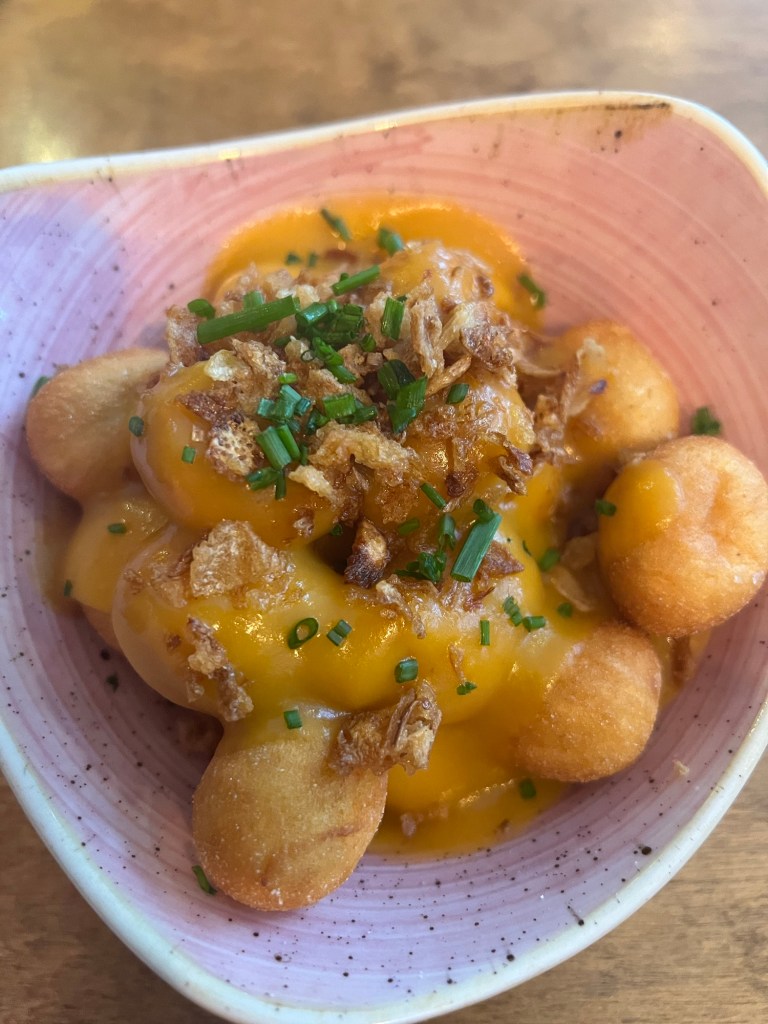
Crispy deliciousness: Pastan’s loaded gnocchi

Pasta seems like an obvious and easy option when it comes to serving vegan food, but so often it’s ignored or limited to predictably dull tomato sauces. 

Not so at Pastan Barbican where the choices include Florentine creme spinach torteloni (Firenze), mini ravioli with mushroom with truffle oil and crumbled chestnuts (Countryside), and pasta umami stroganoff. With branches in Barcelona and Malaga, there are also a couple of clearly Spanish influenced dishes – Catalonia, Formentera and an orzo-based Paella. 

Inside the restaurant is simply decorated and generally pretty full, with a fairly quick and efficient turnover of customers, while managing to feel like there is no rush.

My own starter recommendation would be the loaded gnocchi, which comes with a range of sauces to tempt most tastes. We opted for the cheese, but there are also tomato, and blue cheese options. Pastan Barbican is conveniently and centrally located and they offer predictably good food so I’ve eaten there several times; my meal has always included this dish. The gnocchi are deep fried and slightly chewy, and it’s a chunky enough portion to make you wonder whether there’ll be space for the main course. Of course there always is.

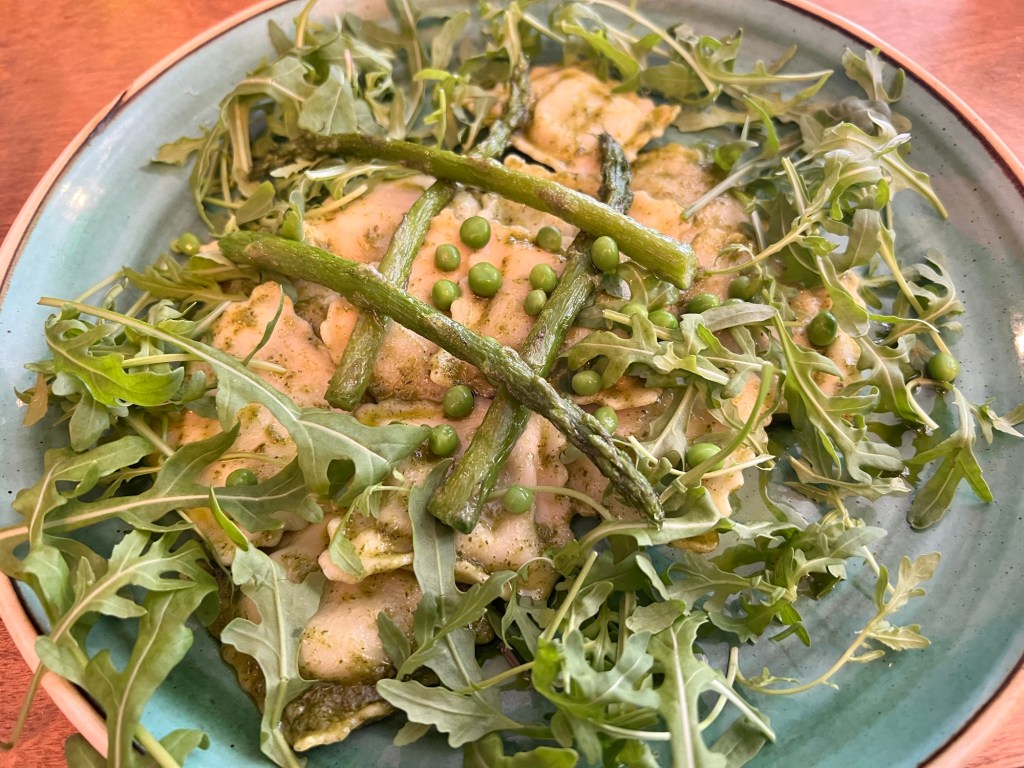
On my most recent visit this was Green Velvet.  A healthy sized ten pieces of pea and shallot ravioli dressed with salsa verde and asparagus. As you can imagine, this tastes very green, but with a creamy smoothness to the sauce.

Green Velvet: asparagus and pea ravioli

My companion chose the Amalfi Orzotto.
The Italian town of Amalfi, as reconstructed on a plate by Pastan, includes orzo pasta cooked risotto style, lemon, peas, fresh mint and ginger. This dish is topped with crispy kale, asparagus and crystallised ginger bites. She declared it heavy on the lemon, which for her was delightful, and only remembered the ginger as a slight lingering heat in the mouth when reminded of its existence. For me the fact that it wasn’t overpowering sounded like a plus. 

Past visits have also included the Comfort You mac ‘n’ cheese, which, with its crispy onions and toasted breadcrumbs, is definitely worth ordering.

There were a few of us eating together, and so although normally too full for dessert it was worth ordering a small portion of the Biscoff doughnuts. These are served hot, crispy and rolled in icing with a Biscoff centre. Honestly, if you can save the space, it’s worth it.

Smile, breathe and go slowly

Schrödinger: Waiting for nothing

Everywhere

By Martin Yelverton

That thing you were about to do…

No, I don’t remember either;

And if I do, how about we leave it be?

It will wait, or it won’t; either way without substance beyond these clutchings.

So let’s sit here a while and watch.

Waiting for nothing, watching, just watching.

There will be the sight of trees and grass waving, There will be the sound of leaves swooning love supreme, There will be the thoughts that roll in and wash it all away.

You will feel adrift, just like me, But here we are; here we truly are.

Be like a tree, and let the dead leaves drop: whatever the challenge, Martin just kept moving forward

Martin: among his beloved trees in Epping Forest

Martin Erick Yelverton, co-editor of BardoBurner and my husband and partner for over three decades, died aged 58 in August of this year. It was sudden and unexpected and it happened at what was, without doubt, the happiest time of his life.

Martin and I first crossed paths late in 1987. Having experienced a troubled childhood, which saw him moving from his birthplace in Zambia to Zimbabwe before settling, aged 10, in Durban, Martin was called up to the South African Army as soon as he finished journalism college there. This was during the time of apartheid, a system to which he was vehemently opposed, and so, aged 20, he landed in London where his training as a sub-editor saw him getting shifts on many national newspapers.

As a draft dodger, Martin knew he couldn’t go “home” without facing a prison sentence until the state-led segregation and discrimination had ended, and so he felt trapped in a cold bleak country where the nights were long and dark.

My dad had died two and a half months before Martin and I first chatted in a bar near the Birmingham newspaper for which we both worked. So we were both in need of a good friend, and we remained best mates for the next 36 years.

Martin was authentic, unconventional, a poet, had a dark sense of humour, and voraciously lapped up my knowledge of 1960s music and the then current 80s indie scene; I was a chronically shy trainee reporter with a penchant for black clothes and bunion-inducing pointy shoes. We shared an innate passion for drinking and together we drowned our respective sorrows and leapt into an intense love affair. Two months after meeting, we booked our first wedding date, before sobering up a few weeks later and deciding to maybe wait a while.

Early days: Martin and Karen in Newcastle

A while became 18 months, and we eventually married in Gateshead registry office, by which point Martin was a sub on the Newcastle Evening Chronicle. Shortly afterwards Nelson Mandela was freed from Victor Verster Prison in Cape Town. As well as the massive step towards ending apartheid, Martin saw a light at the end of his personal tunnel. In 1992, he was able to return, and we settled in Johannesburg, where he spent two years working on the Sunday Times.

For as long as I knew him, Martin was excited by news. Over his 40 years in the business, he often kicked and railed quite vocally against the concept of being a work slave, and went on to try and escape from journalism many times. But he kept returning and, professional that he was, was always welcomed back, open-armed.

Johannesburg, pre the first democratic elections, in the early 1990s was abuzz with anticipation. We lived in Yeoville, a central neighbourhood in what is now the province of Gauteng, and Martin worked right in the heart of the city. We spent many happy hours there, wasted and partying on Rockey Street, oblivious to the chaos surrounding us and wrapped up in the vibrancy and fun of it all. Guns were a common sight, tucked under the belt or in the back pocket, or you’d catch a shiny glimpse of some guy showing his mate the latest flick knife he had picked up. But somehow these never really struck us as the portents of violence they clearly were. Until in March 1994 our son, Ben, was born, and our perception altered.

Parenthood: everything changed once Ben appeared

Although I had been the homesick one up to this point, Martin’s world view changed overnight and he wanted to bring his child back to the safety of England. With the first democratic elections due in April, Johannesburg was bristling with the threat of aggression. On occasion this would bubble up and we’d hear gunshots in the distance.

For Martin, England was absolutely to be the place his son would call home and by June of that year we were kipping on a mate’s floor, complete with a three month old, in London. And – having lived in Walthamstow, and latterly Buckhurst Hill – that’s where we spent the next thirty years. Living near Epping Forest gave Martin the chance to spend a lot of his time in nature; he very much felt at peace among the trees.

Martin and Ben: staking their claim on their spiritual home

Martin was a guy who just kept on moving forward. Sober since January 2013, that sobriety was precious to him, and he did everything in his power to maintain it.

Since his early days doing kung fu, and then acupuncture, Martin had been drifting towards meditation and yoga, and in 2017, he qualified as a yoga teacher. He’s easy to find out there in the ether, on YouTube and Insight Timer. Martin was an excellent teacher – unjudgemental, kind and humble – who never stopped being a student himself. Lifelong learning was important to him and he had no intention of ever becoming a polished finished product. Later he added Pilates teaching to his repertoire, and more recently Martin had qualified as a mindfulness meditation teacher. He had a soothing voice, and a gentle way about him, and he learnt how to use these things to help other people. Martin led regular staff and children’s lessons at a local school, which he absolutely loved.

Christmas 2023: a birthday trip to Brighton

Since his death, many kind words have poured in from colleagues, students, classmates and friends. These have been of great comfort to Ben and me, though Martin himself would be completely baffled and amused to hear the high esteem in which he was held. To quote one colleague, ‘Martin would like to call himself a humble “foot soldier”, but he was very much more than that in the eyes of those fortunate enough to work with him. Sharp-eyed, creative and no stranger to a good laugh.’

His end came with little warning and with speed, but Martin held a true appreciation of the fleetingness of life and the fact that none of us is here for very long. He was brave and he was pragmatic, and he knew that, like all the greatest celebrations, it’s best to leave while you’re still enjoying yourself.

Martin at the peak of happiness: Lefkada hilltop

Sen Viet Vegan on the Pho Mile in London: where tradition meets plant-based pleasures

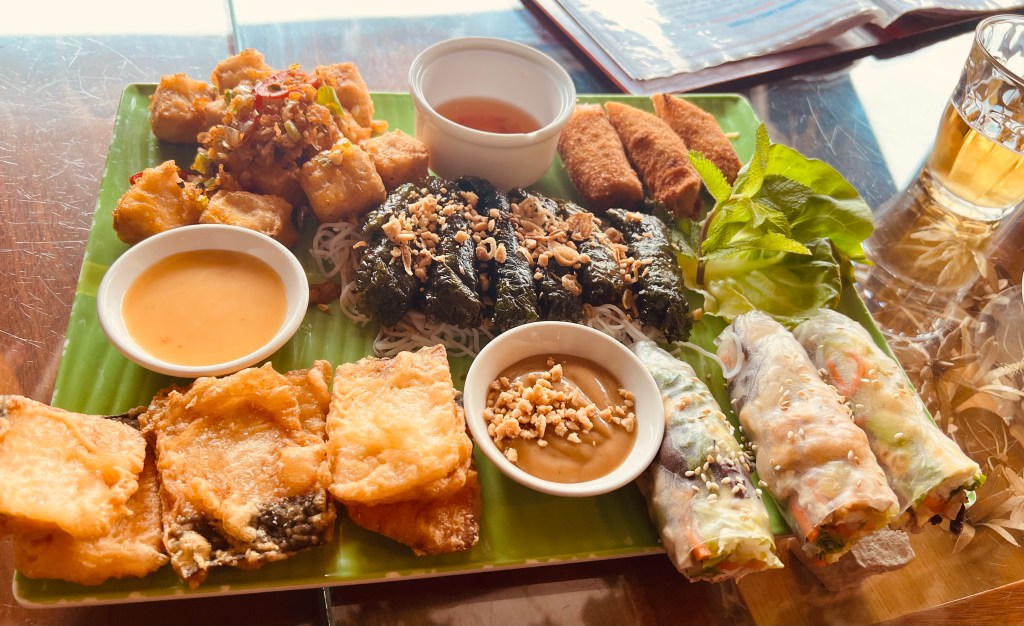
Have it all: Sen Viet Vegan’s sharing house platter gives you a taste of everything from summer rolls to salted chilli tofu

Like most of the eating establishments on the “Pho Mile” in London’s Shoreditch, Sen Viet Vegan Restaurant is family run.

The history of the 10 or so Vietnamese eateries on or around Kingsland Road dates back to the late 1970s when thousands of refugees left Vietnam for a safer life and were resettled by the then government in Britain. Individual families were dispersed across the country, but over time naturally found themselves gravitating towards and putting down roots nearer to extended family and friends.

Nowadays Kingsland Road is to pho – a popular Vietnamese noodle soup dish – what Brick Lane is to curry. Unlike the other restaurants, Sen Viet Vegan, previously vegetarian focused due to the owners’ cultural and religious beliefs, is now fully vegan and has been since April 2022.

It’s an unassuming little place on this busy street, almost empty when we arrived at 1pm on a Wednesday, and we were seated by the window. I stared out on to what was once an old Roman road leading towards Kingsland, an ancient settlement in modern day Dalston.

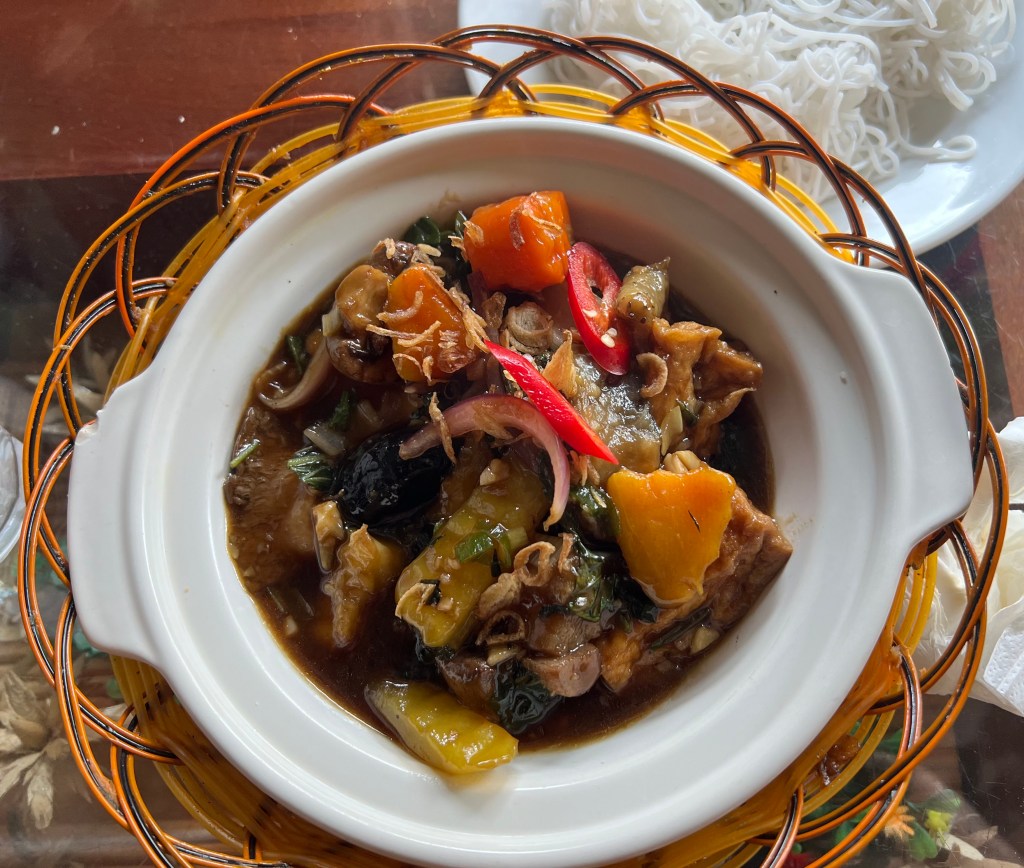
Delicious: the dau hu kho is a tasty feast of caramelised vegetables and tofu

And I looked down at the menu with its luridly coloured photos, which, to be honest, and as usual, I’d already perused more than casually online. Despite my research I couldn’t choose. My inclination was to go for safe, tried and tested food; who could go wrong with a classic tofu and coconut curry? But there was a strong feeling among the three of us that a little more experimentation might yield dividends.

Starters were a no-brainer. Why have one thing when you can have everything? So we unanimously opted for the house platter to share. At £14 a person, this covered pretty much everything from summer rolls to salted chilli tofu, and the portions were generous enough for us all to have one of each and then some. The tofu texture was perfect while its batter managed to be both crisp and fragrant, the rolls with satay dip were fresh, crunchy and tangy, and the grilled betel leaves with black fungus and shiitake mushrooms were intriguingly piquant and umami.

For mains, there was a whole section on the menu called classic Vietnamese family courses, which felt the most authentic way to go, except that the words “banana” and “caramelised” kept appearing. I wasn’t the only one there with a distaste for mixing the sweet and savoury. Names such as marine tofu caramel and tomato sauce, and caramelised vegetables and tofu in clay pot were way out of the comfort zone of my somewhat pedestrian tastebuds, but the most culinarily adventurous of us who did opt for the dau hu kho (the clay pot dish) said it was delicious. It certainly looked good.

The good stuff: the excellent presidential bun cha with spring roll and rice

Having asked the waitress for advice, I took the presidential bun cha, mainly because, once again, it seemed to have a lot of elements. What arrived was incredibly inviting on the eye, and very flavoursome. As a rule, fake meat plant protein isn’t something I’d order when there’s a tofu alternative, but, damn, this was good stuff, with a just-right chewy texture and rich multi-layered flavour. It came with a spring roll and vermicelli or rice.

Once again, I’d eaten too much to want afters, but there were four choices on offer, mainly creamy puddings, with one interesting-looking fried ice-cream dessert, which for novelty value alone would have been my choice.

Next time maybe. I say this with confidence as, having just been there, I’ve already booked my next visit in a few weeks time. Reasonably priced and with a friendly staff serving flavour-rich traditional food, Sen Viet Vegan gets the full five stars from me.

Discovering Lefkada’s vegan delights: A guide to plant-based eating on a Greek island paradise

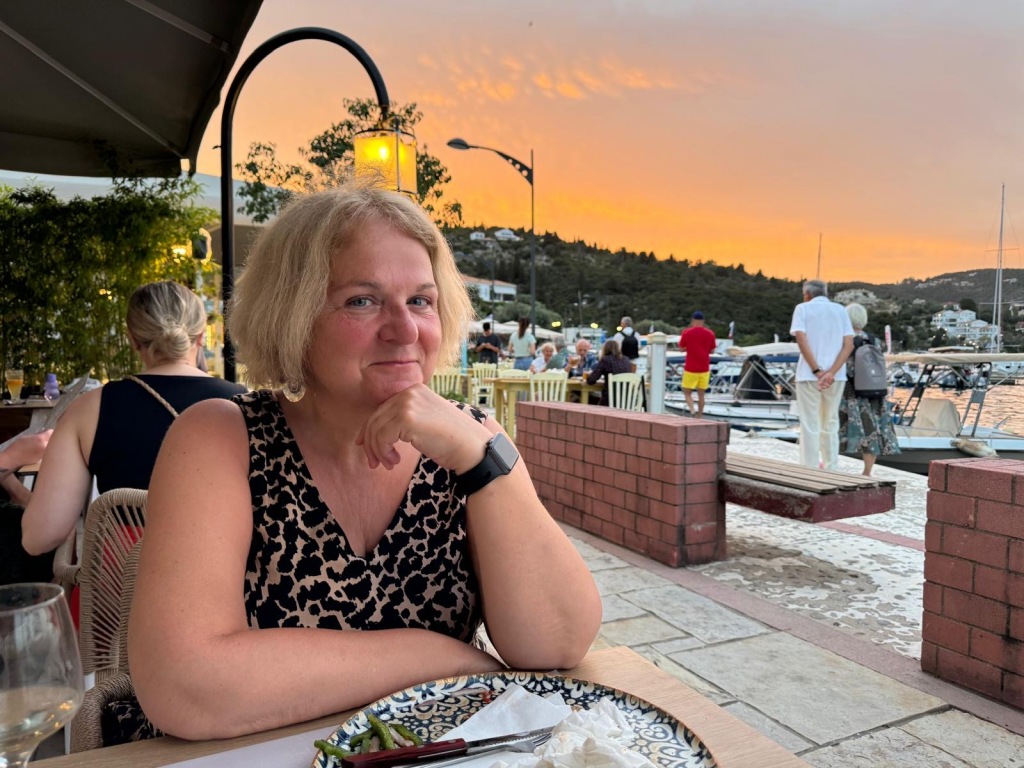
Sunset supper: settling down for dinner at Apico

Mention the words vegan and Greece in the same sentence and anyone who has ever visited the country will tell you how superb the herbivorous options are. Edible plants, it’s true, spring up like weeds through cracks wherever there’s a vacant patch of earth, and the corner stores – or supermarkets as they are generally referred to – are fronted by trays of brightly coloured, often supersized, fruit and vegetables. Baby figs drip from the trees, vivid orange apricots crushed underfoot lie in their own juice on the pavements, and lemon and lime trees grow wild.

So self-catering is a great option in Greece for those of us who love the veg. As well as fresh produce, gigantes beans, olives and oat milk, often in a range flavours, are widely available in even the smallest of villages.

But while recently spending two weeks on the stunning island of Lefkada, there were inevitably points when I wanted a night off cooking and also times when I  simply craved a great fat coconut-oil-oozing veggie burger and chips; processed vegan products, along with sweet treats, simply aren’t on the shelves at all. I’d been there before, thus though my tooth isn’t really all that sweet, I’d squirrelled a few cereal bars and a packet of biscuits or three into my suitcase to tide me over. I also found that many of the shops had, if you cared to dig deeply enough into the ice-cream fridges, the odd vegan Magnum smiling up from the depths. That was enough to keep me going. 

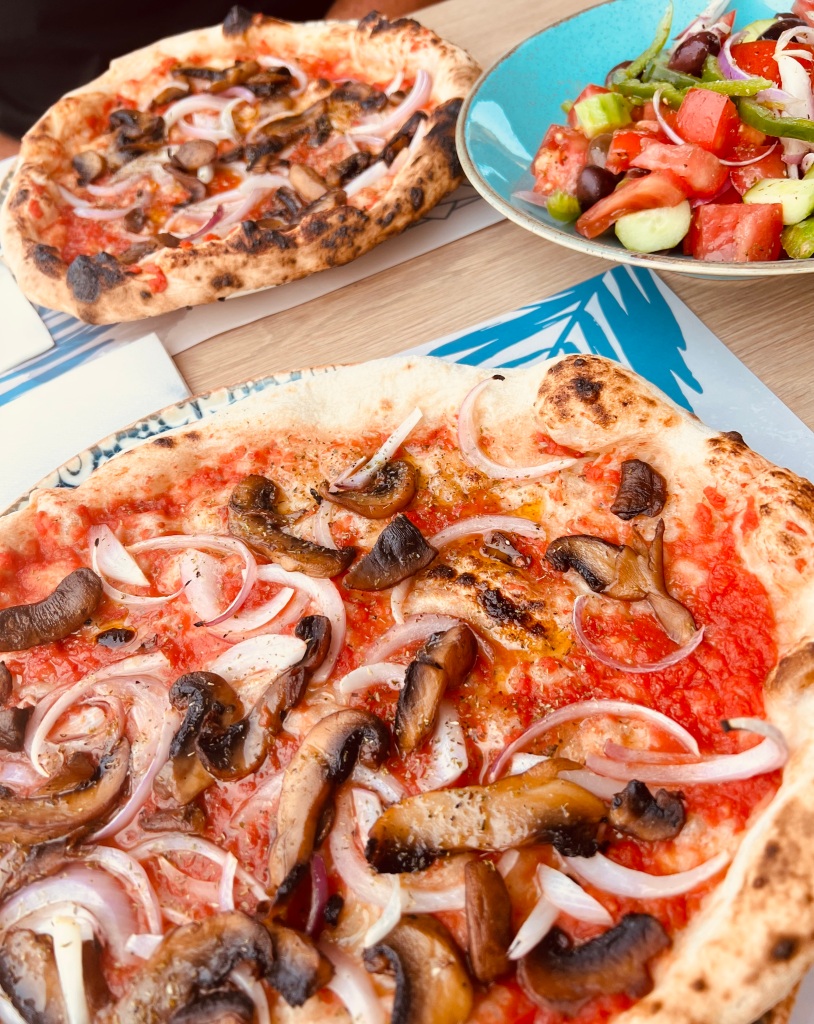
Vegan pizza: one of the options at Apico

I was there on retreat, staying with a group, and there were, therefore, times when I had little to no say in the choice of restaurant. When this happened, I would immediately be directed towards several dishes that appeared to be vegan-friendly, although my advice would also be to check and double check with the waiter, being quite specific about what you can’t eat. Generally vegan-safe and incredibly tasty is gemister. This traditional meal in its veggie incarnation consists of peppers and huge tomatoes stuffed with rice and vegetables and baked in an oven for around 25 minutes and often served surrounded by long roasted potatoes. The other commonly seen food is briami, which is basically a Greek roasted ratatouille. With both of these, as with the ubiquitous Greek salad, be sure to ask in advance about feta, which pops up everywhere.

When I had more free choice in terms of eating venues, there were a few places I kept going back to. There are no dedicated vegan cafés on Lefkada, but, if you hire a car during your stay, the Happy Cow app easily guides you to a place with suitable options within 45 minutes or so of your starting point anywhere on this small island. Without a car, the island’s main town – also called Lefkada – is easily reached by public transport or taxi from wherever you’re staying. 

My personal favourite-find choices begin in Lefkada town, with the restaurant Arodo, located at Dimitri Golemi 10. This super-friendly restaurant serves traditional Greek fare, is situated right by the harbour with the ever-present hills in the distance, and has around 15 clearly labelled (VG) vegan options, small dishes and mains, on the menu. On seeing such comparatively vast choice, we excitedly ordered so much food that the waiter told us politely but firmly, “Stop, this is too much.”

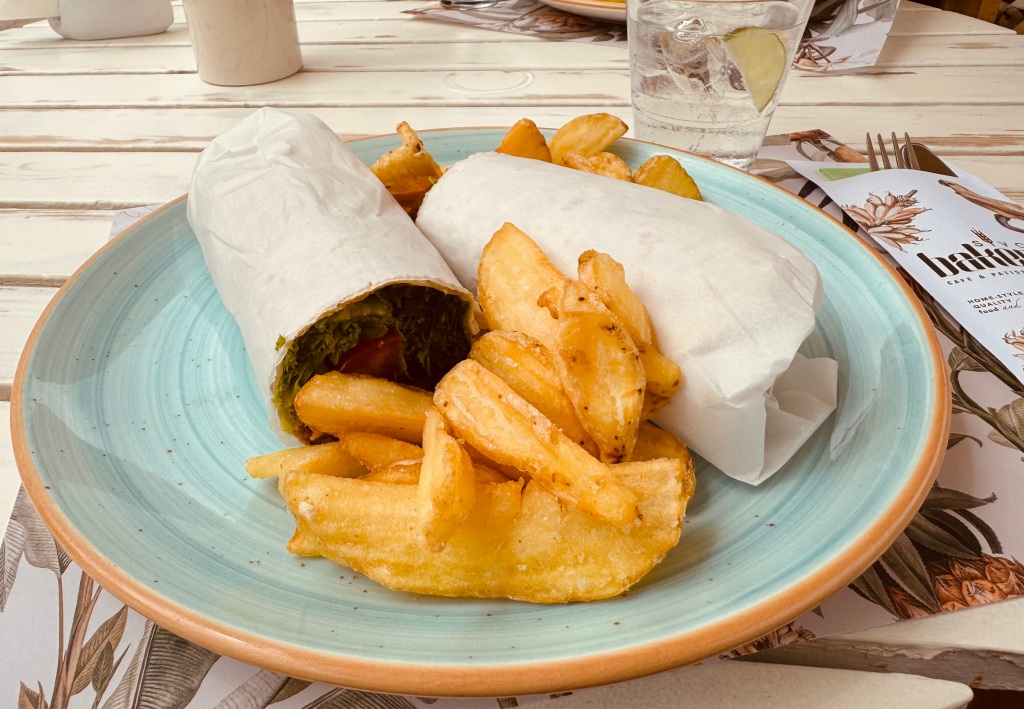
Vegan gyros: perfect for taking the edge off ‘hanger’ at Sivota

The staff were knowledgeable and the owner told us that he loved vegans because “they are so strong”. Even after cutting down on the chow, our starters were bread and garlic bean dip (on the house), mushrooms, spicy peppers, chickpea patties and courgette fritters.  For mains we had pasta with olive oil and garlic, and stuffed tomatoes and peppers with rice. This was my favourite, and my largest, meal of the holiday, if not of my year.

Our original plan had been to visit Chop n Roll round the corner for dessert, again a Happy Cow recommendation. In the end we were too full for ice cream, but it looked like a potentially interesting place if you manage to keep enough space in your belly. Specialising in Thai stir-fried/rolled ice cream, it offers vegan coconut version with toppings such as raspberry, pistachio, Oreos and mango. The reviews that I’ve read have been mixed. It’s the kind of pudding, apparently, that you either love or hate. You’ll find it at Ioannou Mela 16.

Next on my list of favourites comes Sivota Bakery

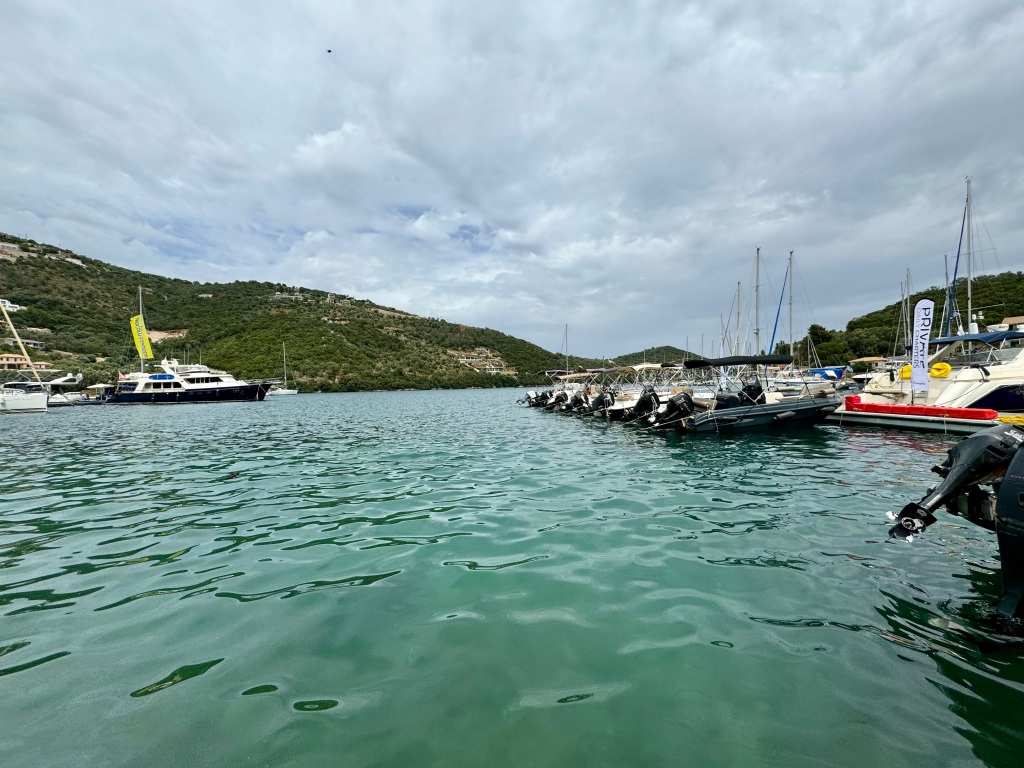
Haven for the hungry: the beautiful village of Sivota on Lefkada

We were hungry to the point of hangry when we arrived, having somehow managed to miss lunch, and it now being around 3.30pm, so it was a godsend to find this place in the little picturesque village of Sivota, and again we sat outside right by a small marina. There were a few vegan options clearly marked, including a burger, and overnight oats. We lunched on the vegan gyros with the most amazing curly, crinkly, crispy chips, and took away a hefty hunk of banana bread for later – the only slab of vegan cake we managed to find on the whole trip.

I was based in Nikiana, and located there is, perhaps, my number one eatery on the island: Apico.  With vegan options for any time of the day, we were catered for from breakfast to midnight. They offer a club sandwich, two dairy-free pizzas, and a magnificent burger and chips. Particularly impressively, this is a restaurant that really gets vegans, to the point where they made it clear, without my asking, that I should avoid one specific salad as the dressing contained honey. And ultimately my needs being understood without the necessity for constant explanation is the most important thing of all.

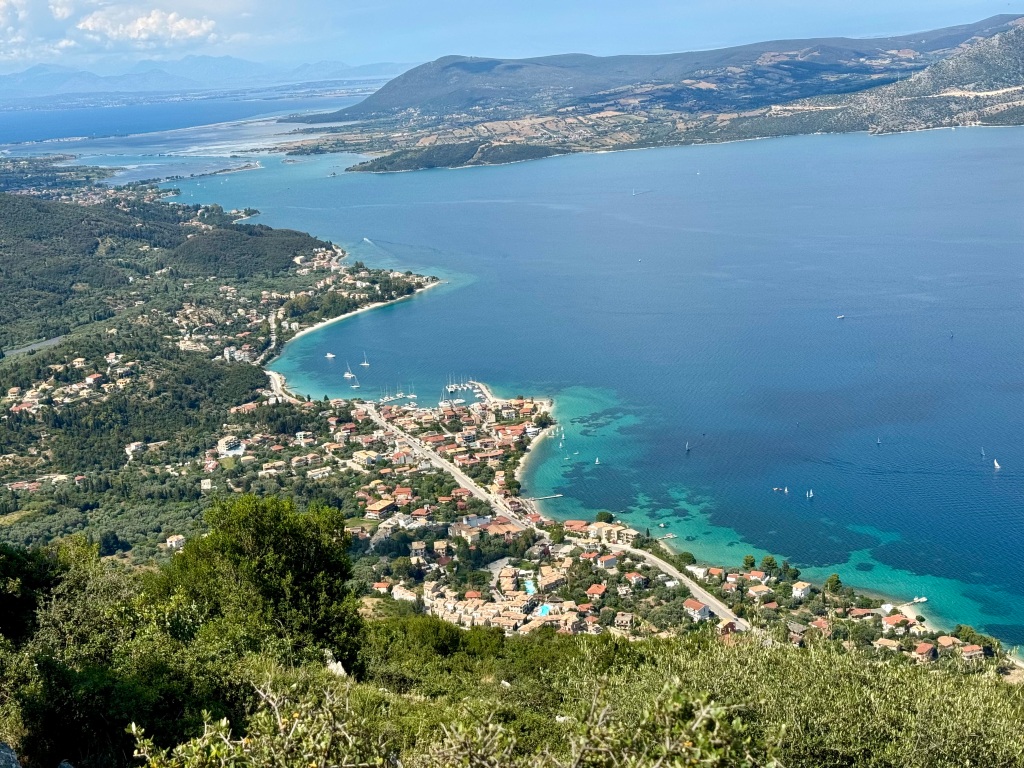
Ionian idyll: the view of Nikiana from the mountains

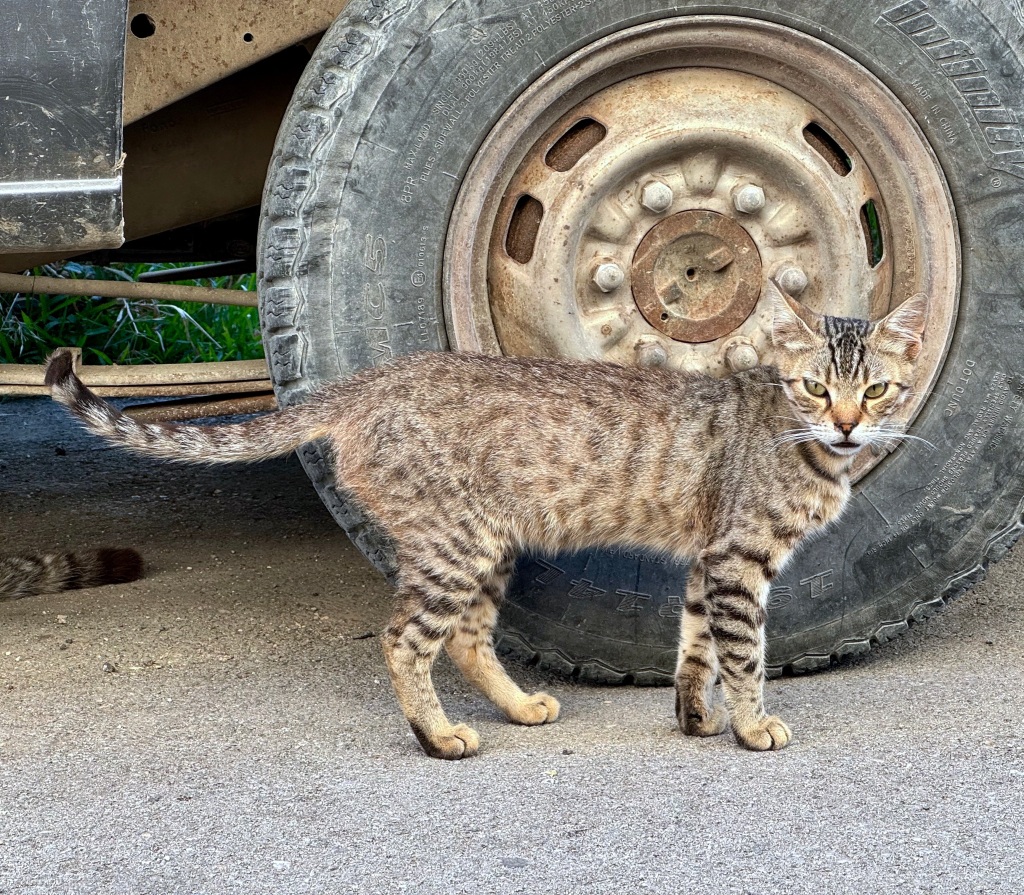
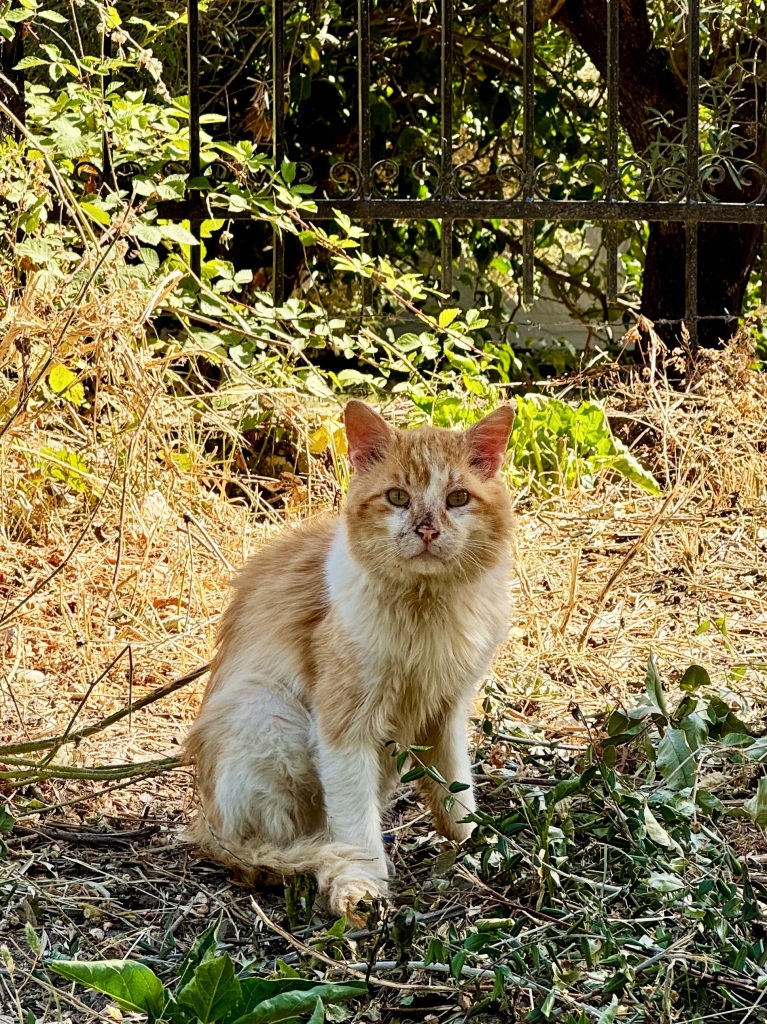
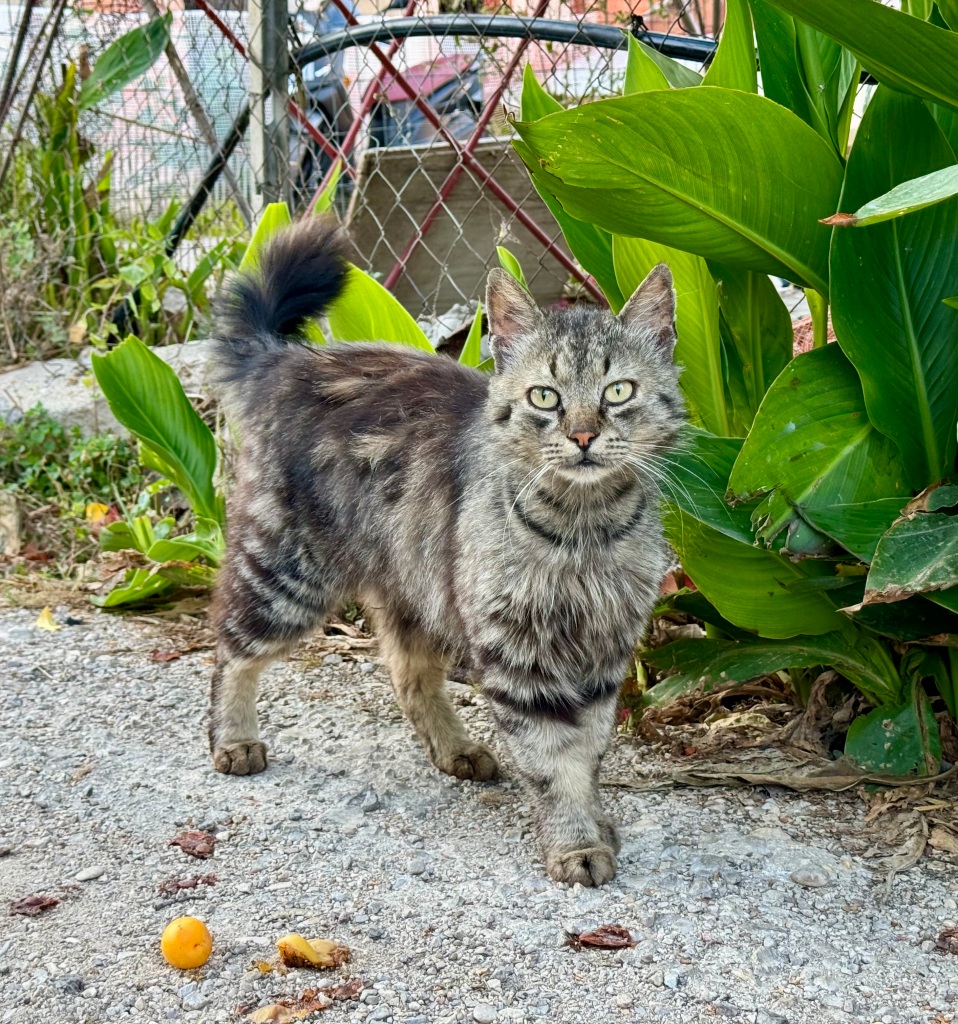
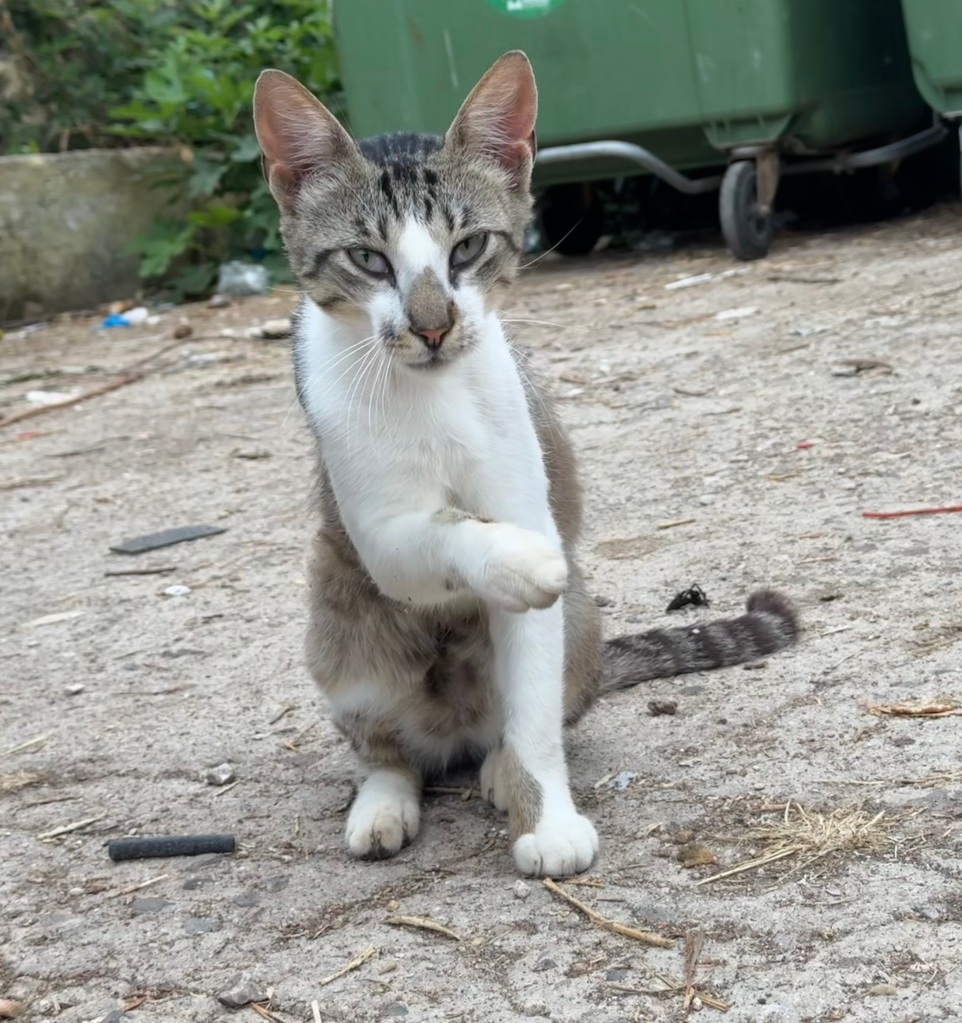
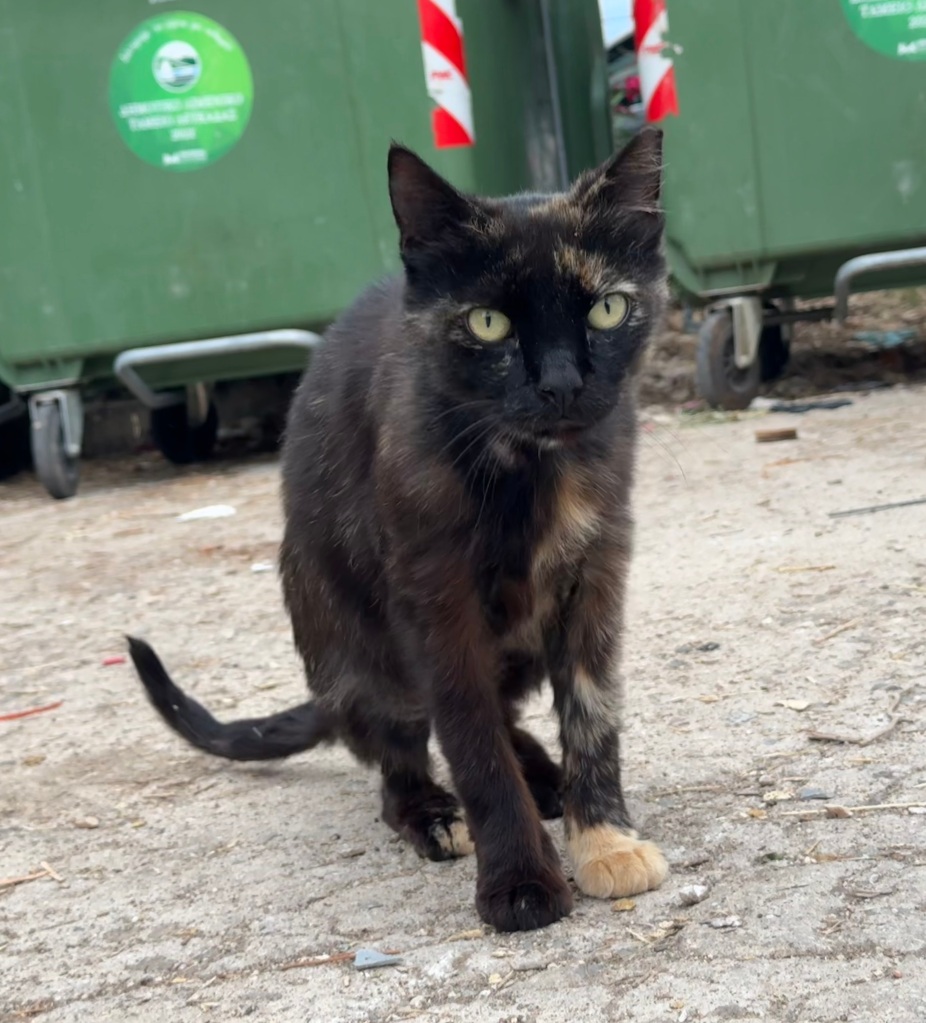
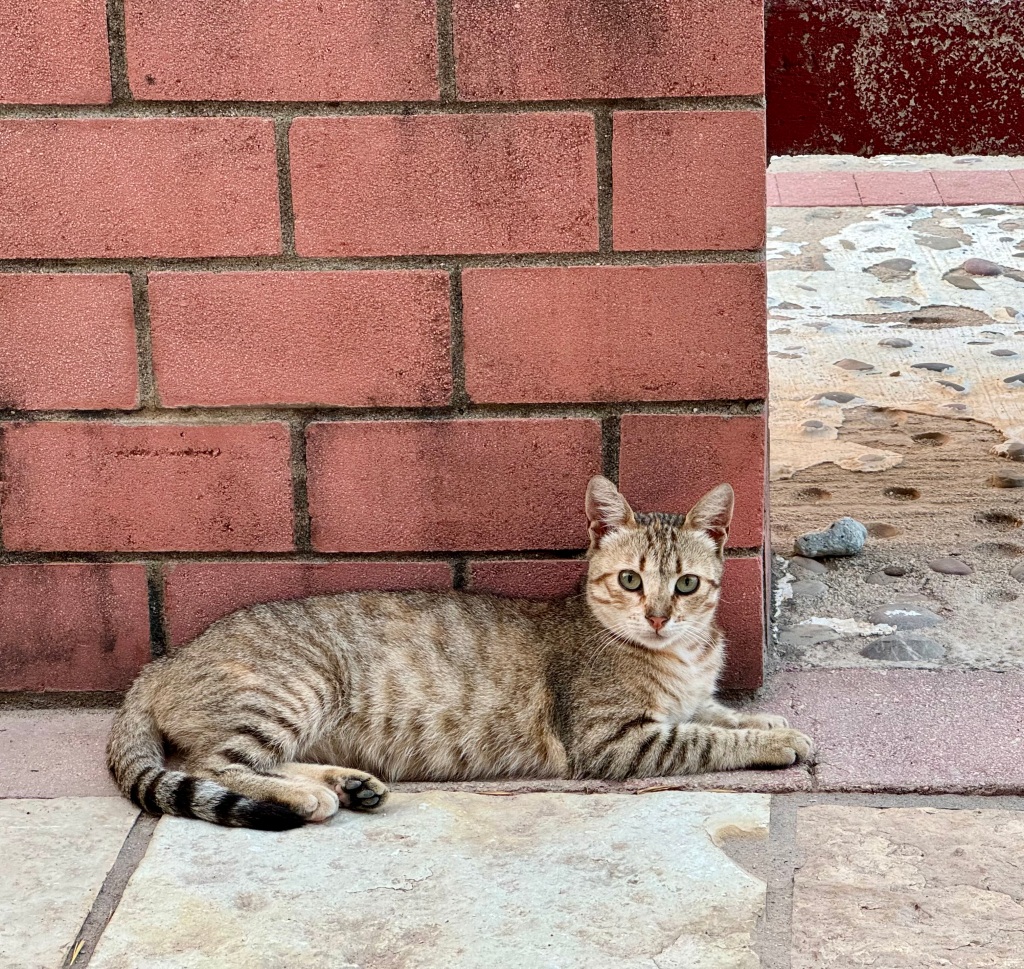
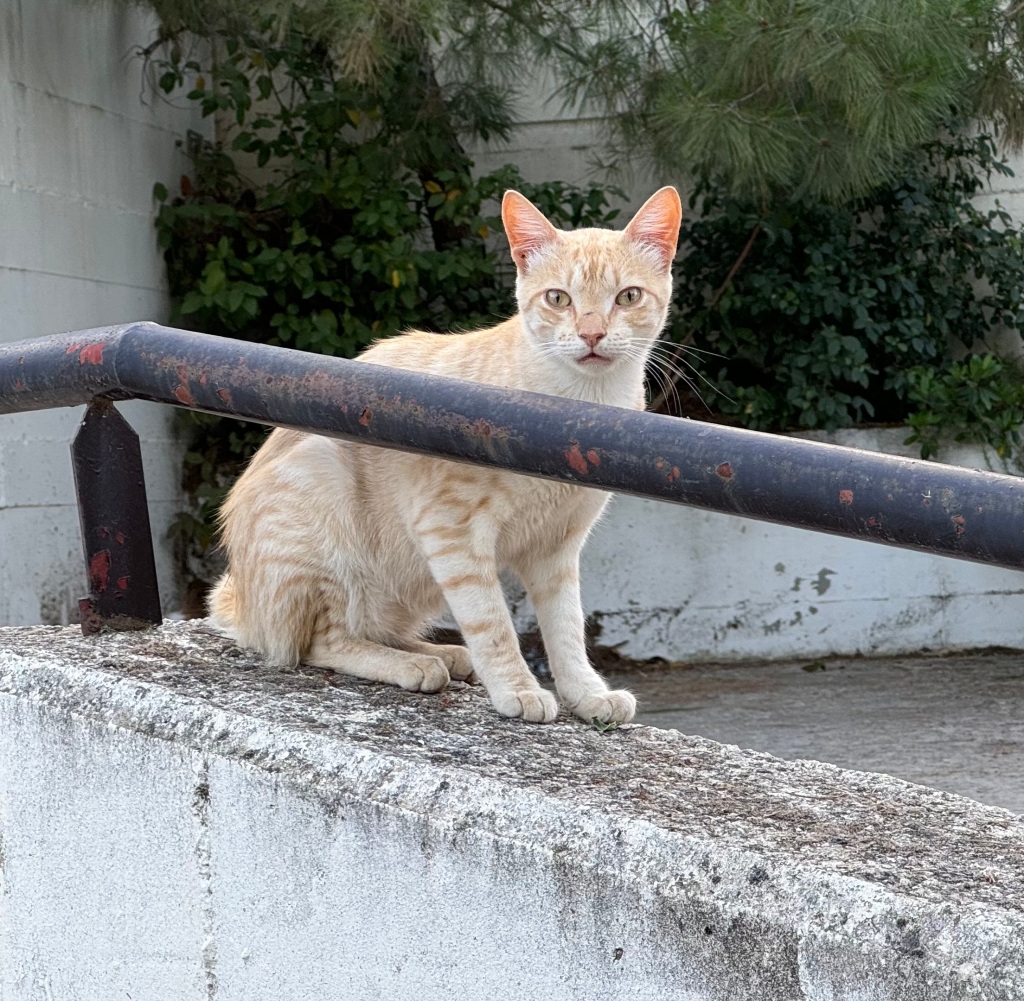
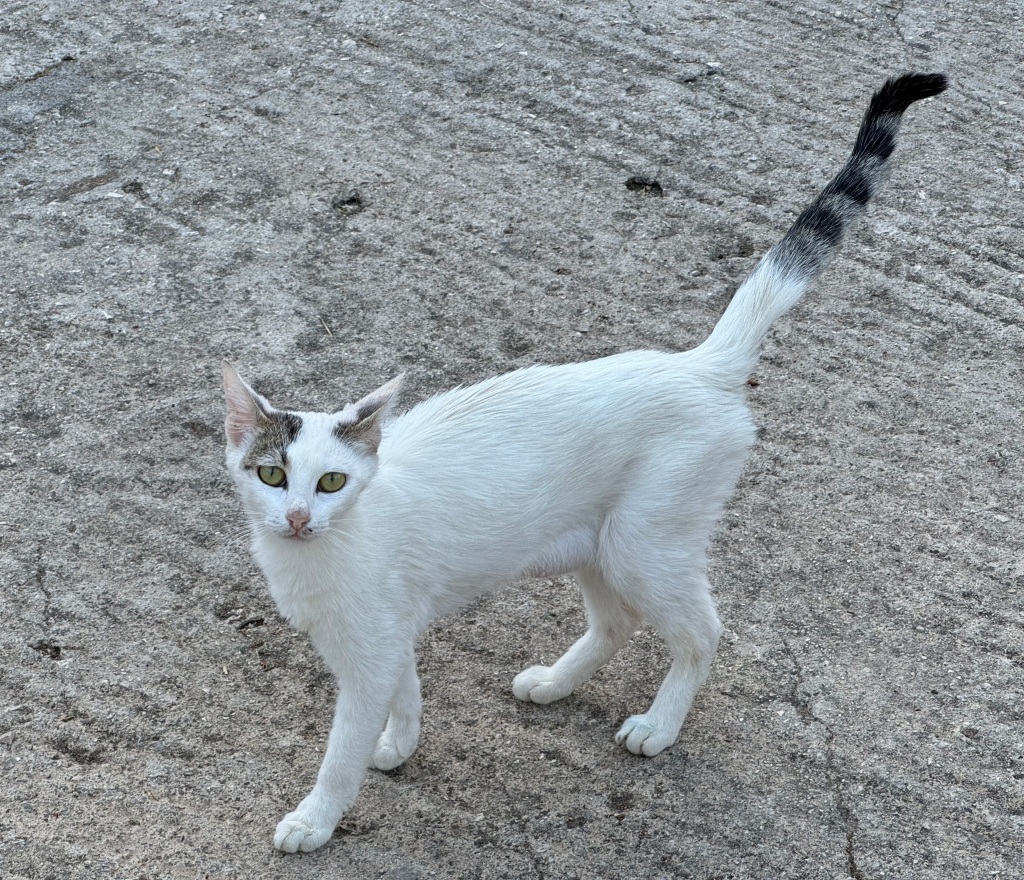
Tell me, Muse, of the cats of Lefkada, the crafty ferals who banished snakes to the crags…

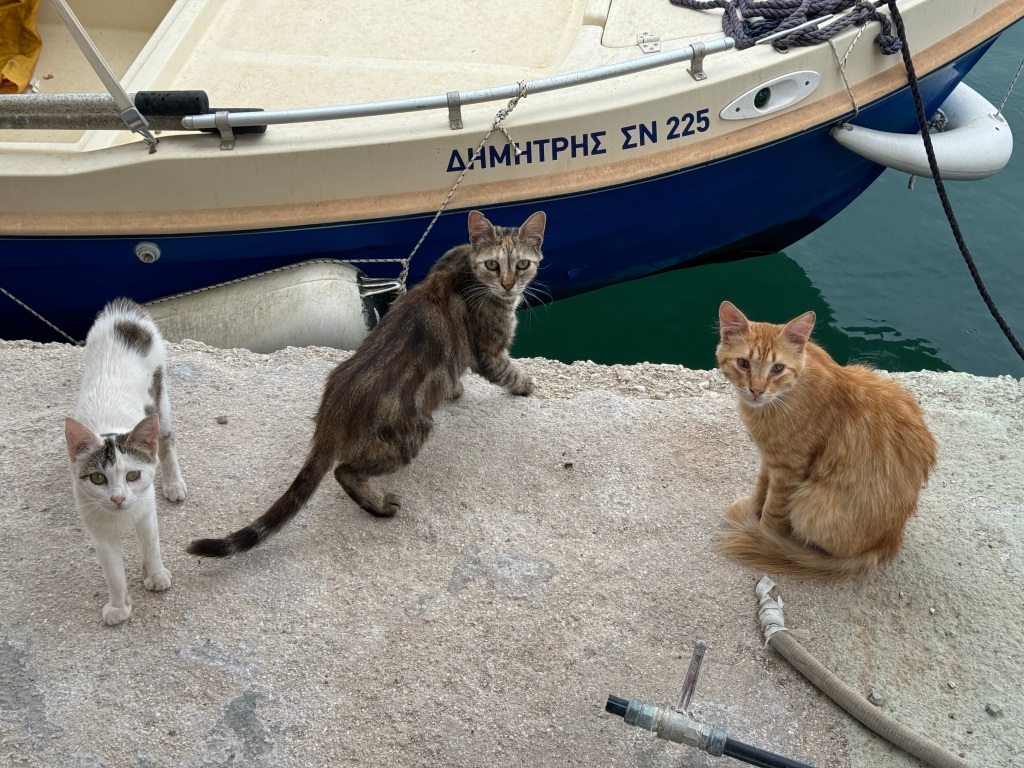
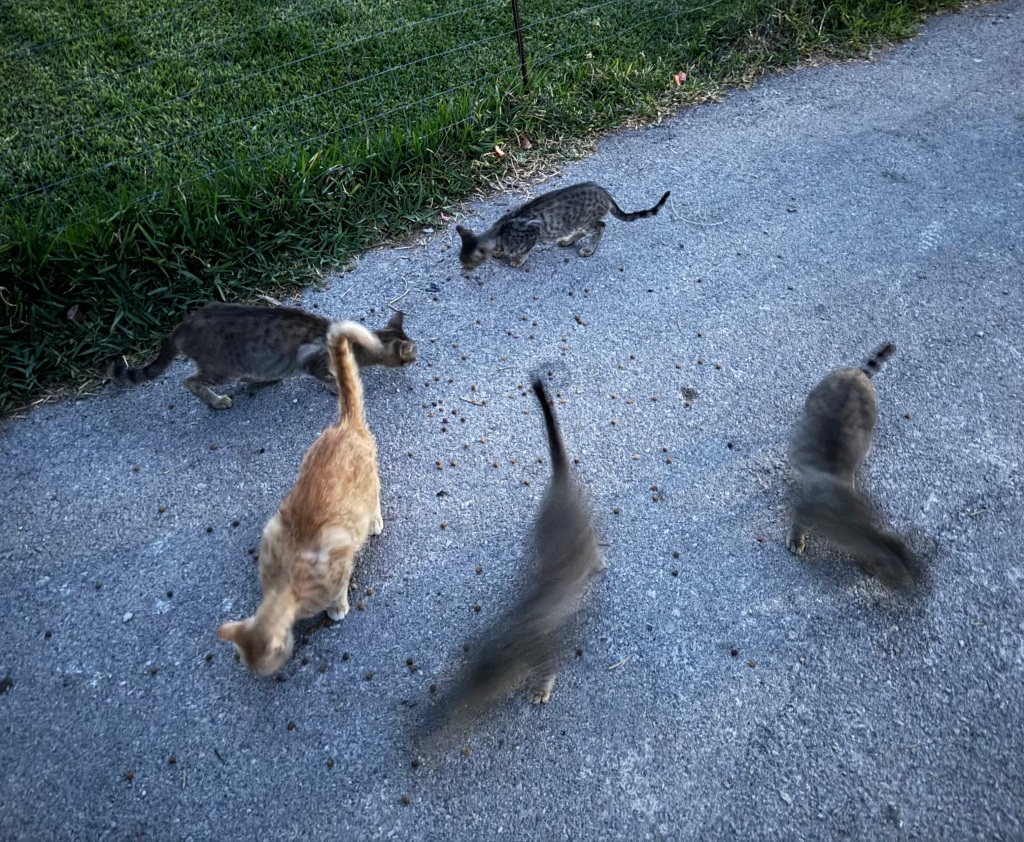
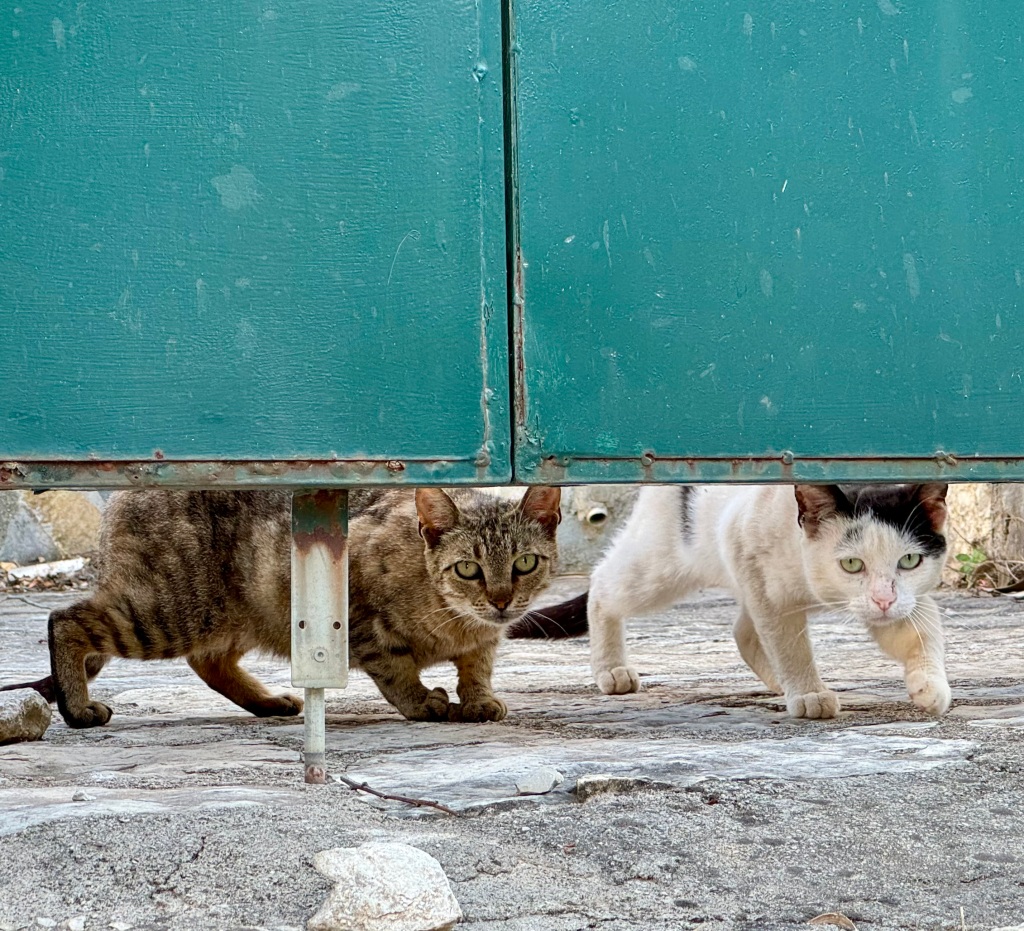
Three cats interrupted studying fish in the harbour at Sivota, Lefkada

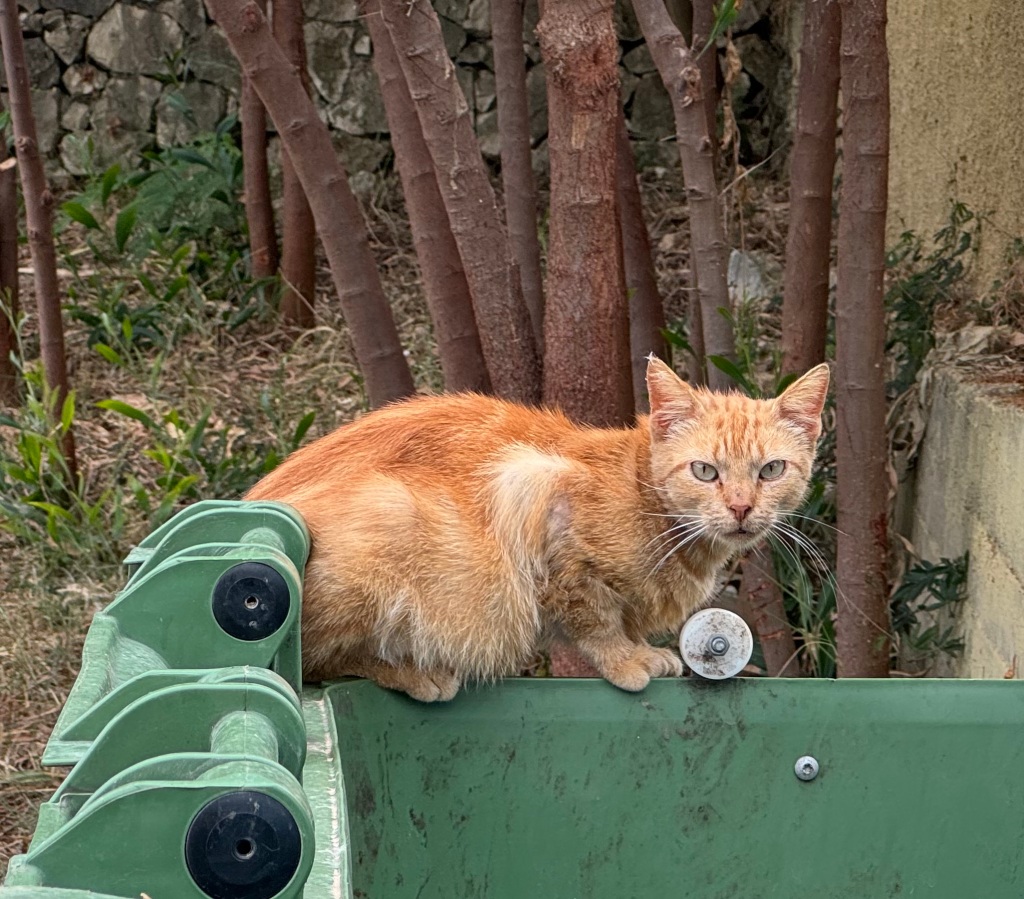
At first it seems as if there are scores of feral cats wandering the lanes of Nikiana, lurking around the industrial-sized rubbish bins near restaurants and blocks of flats, shading themselves under parked cars, sitting on empty plots of land with thousand-yard stares in their eyes, drifting in and out of a half-built villa. They are seemingly everywhere.

After a few days of regular contact with them you begin to recognise individuals, and the apparently ubiquitous feline community is smaller than at first it seems; maybe a couple of dozen or so, which is a strong presence in a small village. There are certainly enough cats here that if this were England, say, and not the island of Lefkada in Greece, something would Have To Be Done.

Here they are a natural component of village life, and to a cat lover at least, they are wonderful citizens alongside the incredibly friendly local people.

Some of these cats are battered and scarred from the wild lives they lead, while others look pristine, as if they’d managed to dodge every existential fight that had come their way. A charity does a bit of neutering from time to time when there is enough money, and locals and visitors put out food here and there. There is even a big wooden box-like structure on one pavement, with the words “Kat-Cat Hotel” painted on it.

I never saw any rats here. It’d be a foolish rodent to try.
I was thinking about this when a shopkeeper told me about snakes. “The snakes come down from the mountains to swim in the sea,” she said. Er, OK; but she’s the local, so fine. “Yes, they come here to swim, but if we didn’t have the cats, the village would be full of snakes.” Her eyes fill with impassioned light as she paints a picture of these cats fighting off hordes of snakes, and even mentions scorpions a few times.

There are indeed snakes and scorpions in Greece, but it’s hard to imagine such epic animal battles in this peaceful village, and even harder to fact-check, but my partner suggests that maybe the shopkeeper’s story is not meant to be taken literally, that perhaps this is some kind of allegory. I like this.
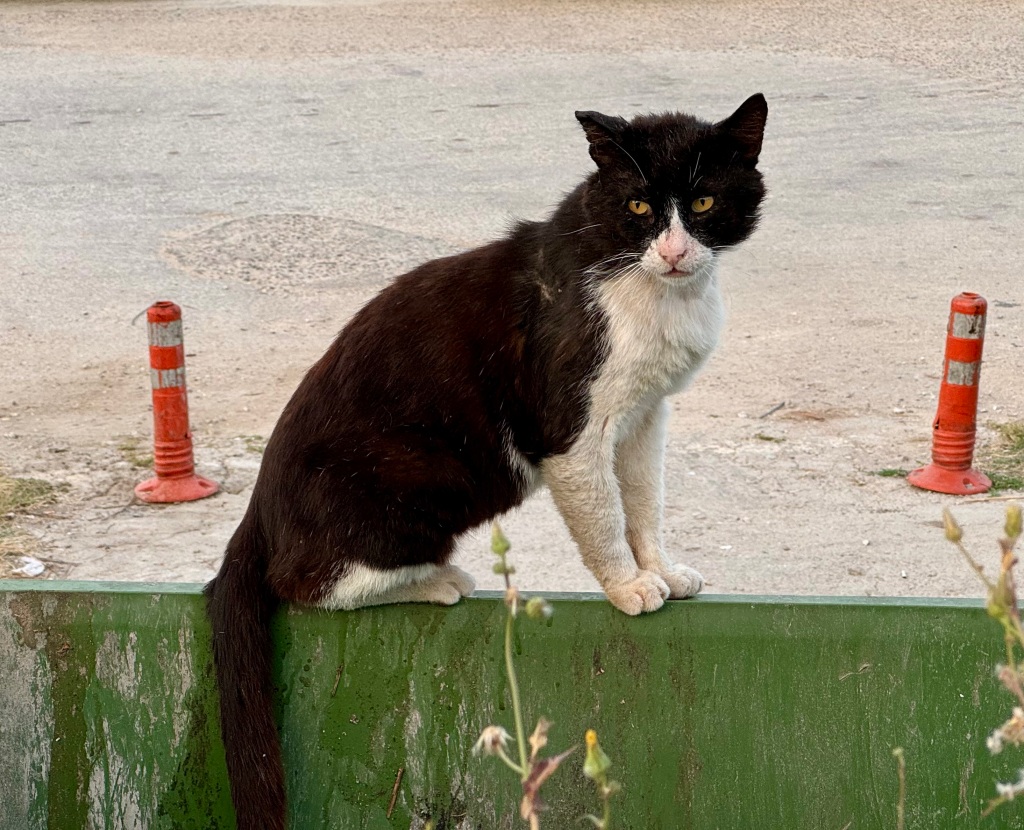
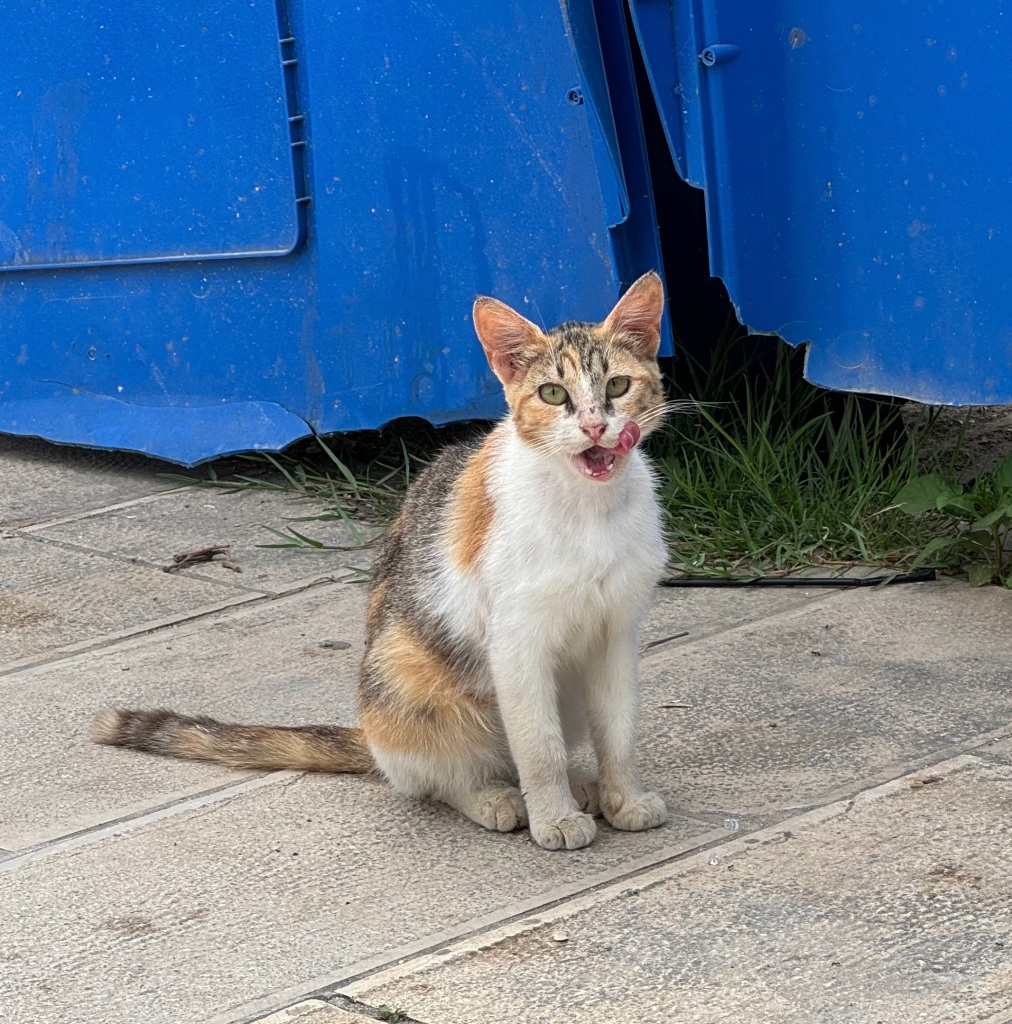
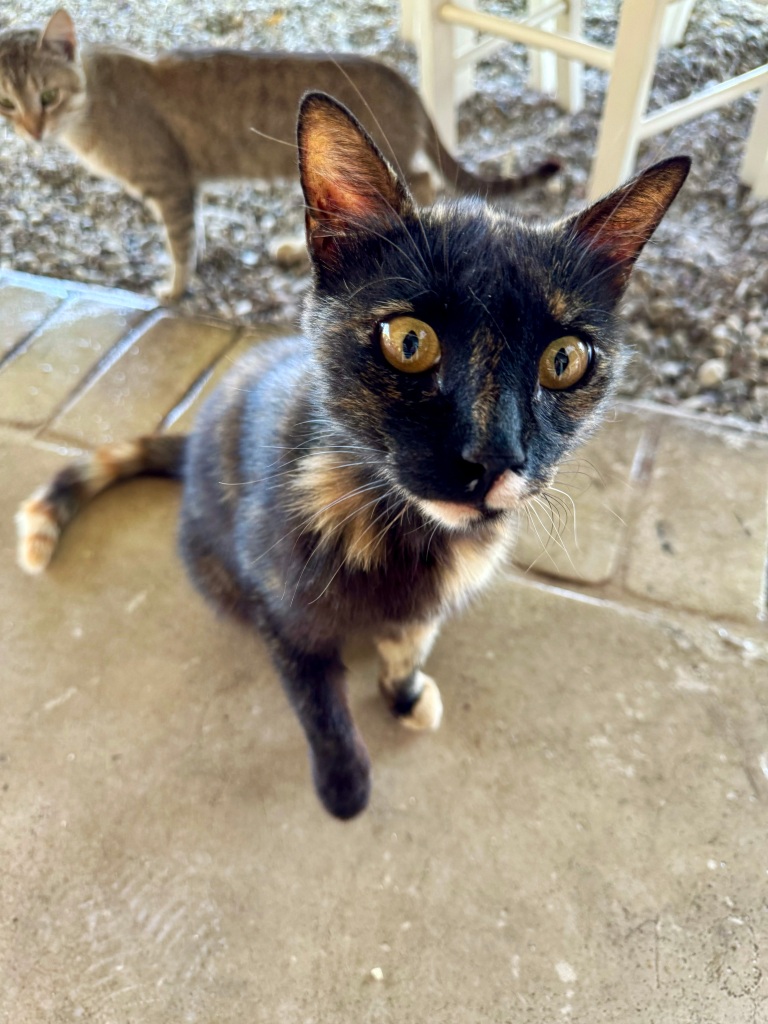
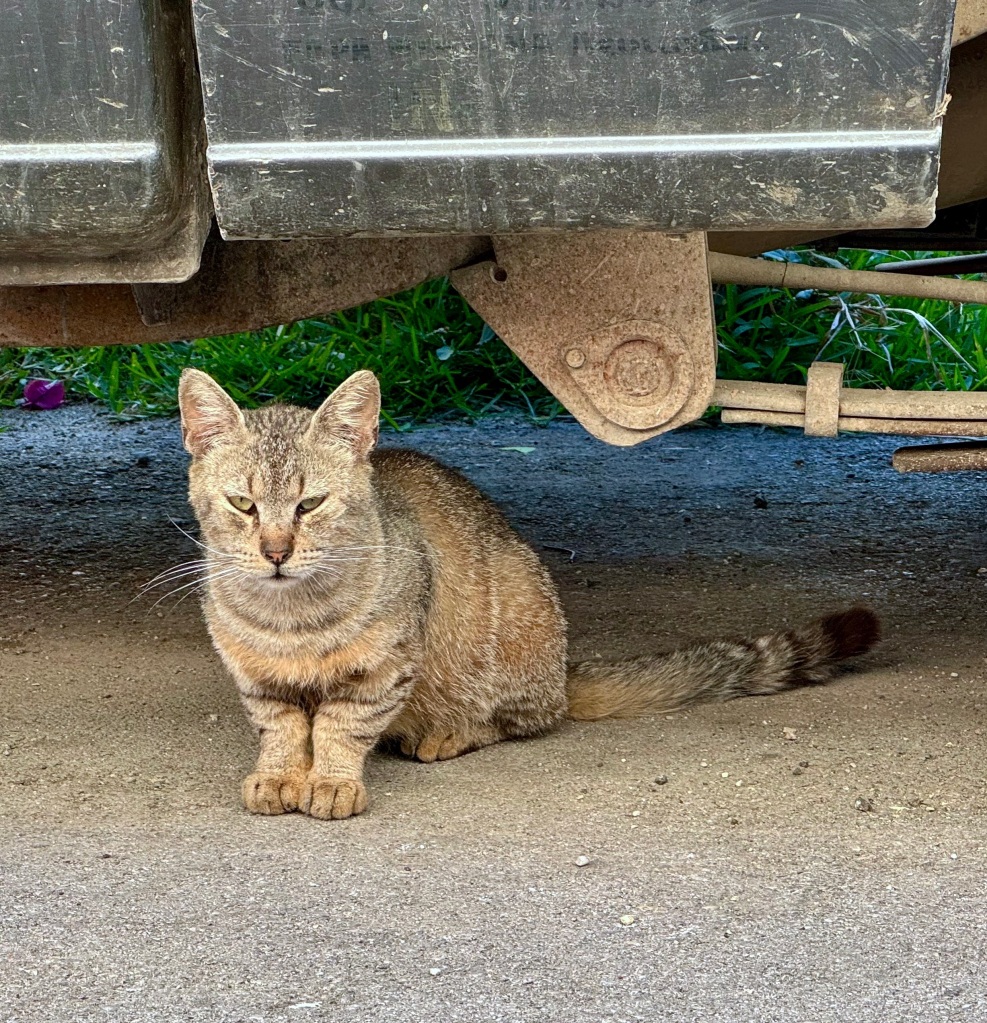
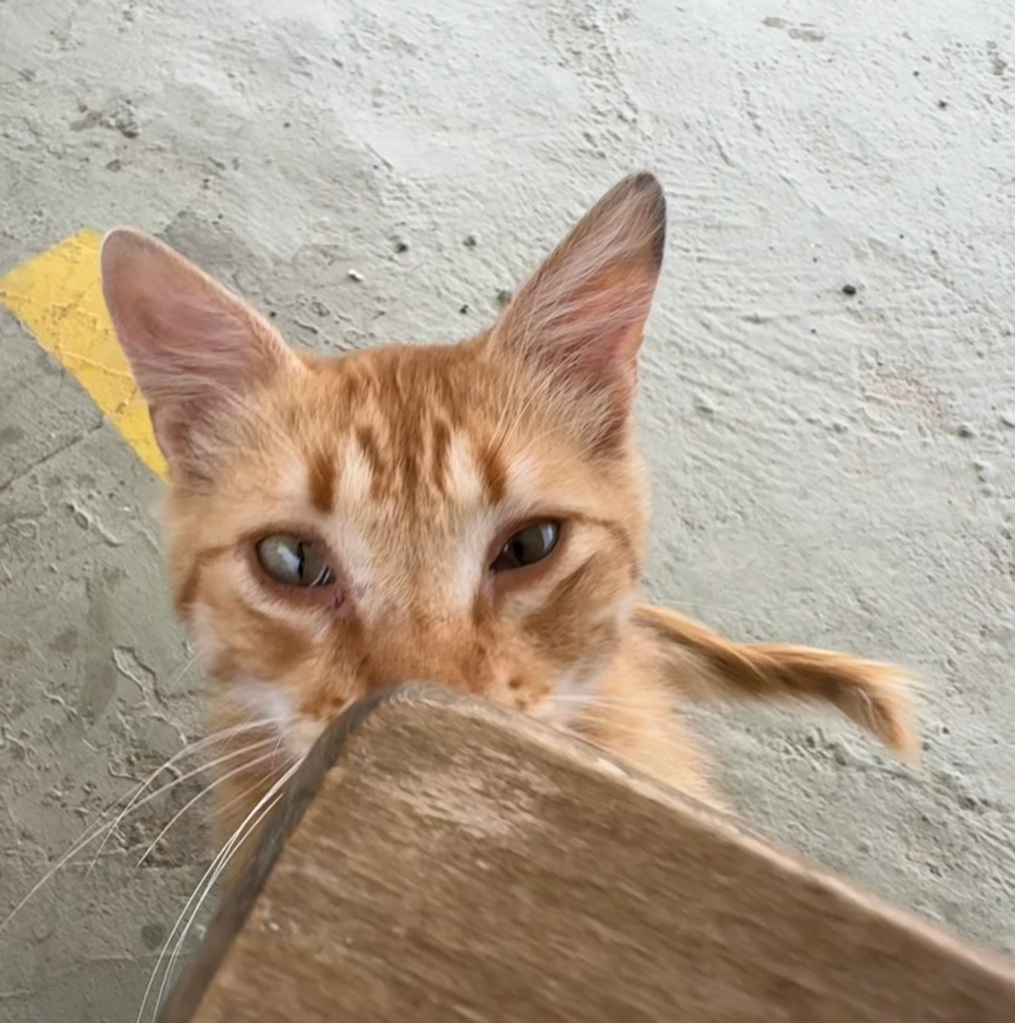
I’m not sure whether any of these creatures were involved in keeping mountain snakes out of the Ionian waters in which I swam, but here are some of the cats I crossed paths with in the past fortnight (mainly in Nikiana, but a few at a handful of other places on Lefkada)…

It’s easy to lose your head on the spiritual path – but true insight comes with practice

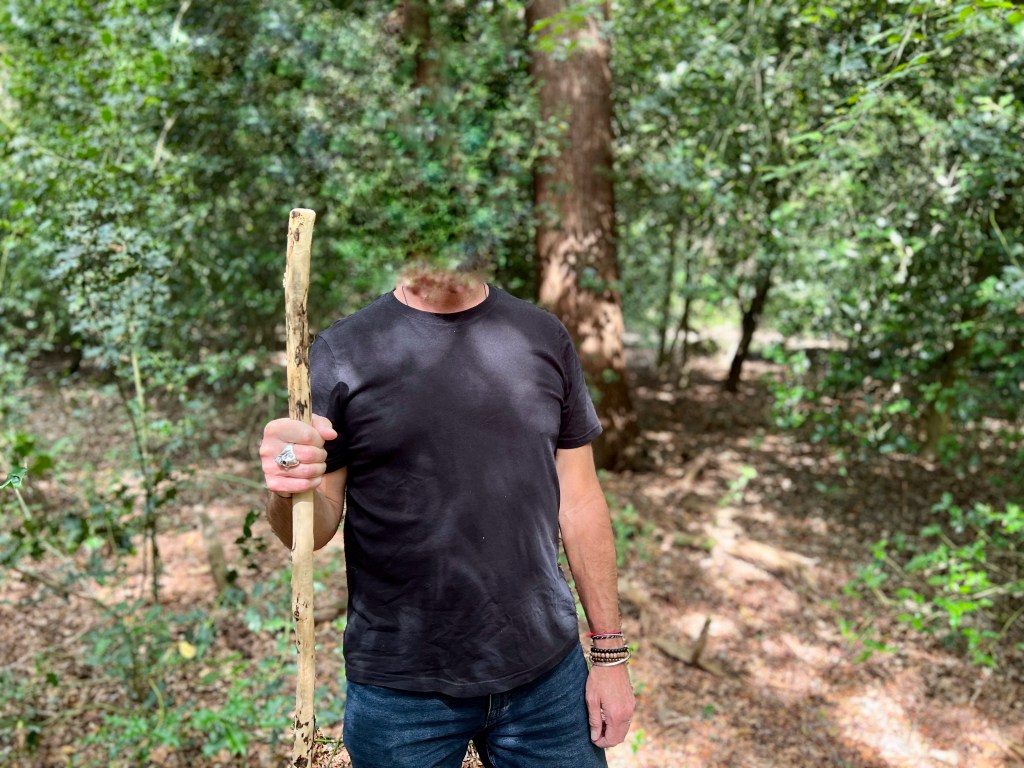
Where is my head? My experience of headlessness via clumsy digital fakery

The room is filled with smiling, headless people, or so they are claiming to be. As am I: a headless man looking at headless men and women looking back each other. Our teacher, Richard Lang, gleefully, if a little bafflingly, says we are all “face to no face”. We are here to learn more about what this means via the Headless Way.
This purports to be a direct and instant route into the experience of pure consciousness – a state of open awareness in which all phenomena emerge, from thoughts to sights, sounds, sensations, everything.
It’s a state pointed to in many spiritual traditions, including different strands of classical yoga as well as branches of Buddhism such as Mahamudra and Zen. These traditional approaches hold that the experience is always there with you, instantly available, but it’s taken as read that you need to spend a long time meditating or otherwise practising to get it. The result is nothing less than enlightenment.

With the Headless Way, though, there’s no need to shave your head and stare at a wall for years on end; pure consciousness – indeed enlightenment – can be experienced right now by anyone who cares to experience it.

Take a few moments to look out into the world; now notice that you cannot see your head, that all there is to see are the sights out there, that you cannot see the one who sees. That one is pure consciousness, or, as it’s said in the Headless Way, your true nature. This is naturally much simplified and is not intended to convey the concept with any depth, simply to state it in its most basic form.

The approach was first explicated by the English spiritual teacher Douglas Harding in his 1961 book On Having No Head: Zen and the Rediscovery of the Obvious, and since his death in 2007 his torch has largely been carried by his student – and our host today – Richard Lang. The work has had a minor resurgence in recent years thanks to the inclusion of Harding’s teachings, as well as mini courses by his successor, on Sam Harris’s meditation app Waking Up, which is where I first came across it a few years ago.

All seeing: Iconic head and bowed head on the spiritual path

I’ve found it an excellent little mind hack and, working with it with varying degrees of commitment over time, it’s helped to enrich my meditation practice, clarifying in a down-to-earth way an experience that’s traditionally conveyed in more esoteric language. That said, I do not consider it to have made me an enlightened being. I think of the Headless Way as a kind of parlour trick, albeit a powerful one that can offer useful pointers on the seeker’s path.

Richard has been generous in sharing this work and the practices – or experiments, in Headless Way parlance – associated with it. There is a free app that amounts to a comprehensive course in the method, as well as a website with plenty of useful material and a YouTube channel, not to mention regular live Zoom sessions where the work is explored. This is an honourable exception to the general rule of the modern industrial spiritual complex of monetised Buddhism and mindfulness.

While I had some familiarity with the Headless Way from practices learnt online, I was keen to learn more at an in-person workshop, which is how I found myself in a room full of the headless in Stoke Newington, London. I can’t say I really learnt much more than I already knew about it, but it was interesting to spend a day practising with fellow seekers.

Richard is an inspiring teacher whose enthusiasm for what he is offering is palpable and built on years of experience – he started practising with Harding when he was 17 and is today 71. He spent the first part of the morning session outlining the theory of the Headless Way, which is essentially an approach to non-dual awareness, then guided us into some of the exercises used to convey it. These were engaging, and did what they were supposed to do.

There was an underlying feeling for me, however, that while our teacher kept stressing that we shouldn’t accept anything on his say-so alone, but test it for ourselves, he was clearly holding up precise hoops to jump through, and that we did. In particular, it felt like we were being strongly nudged to express what we were experiencing in the very specific, sightly corny language of the Headless Way – face to no face, I am space for you, you are space for me, etc.

Long haul: The insights of open awareness come from dedicated practice – or so the records of thousands of years suggest

It was at this point that the whole thing began to feel a little groupthink to me, if not borderline culty. Clearly no one can force you to have a particular mental experience, but somehow in situations like this it’s very easy to simply go with the flow, to not be the awkward customer, especially when guided with such passionate confidence by the teacher.

There was very little space for personal reflection on what we were doing and the group discussions were both tightly controlled and very brief. There was a lot to get through, perhaps, but I kept wishing for more time simply to absorb and reflect on the practices.

I struggled a bit with the afternoon session, which involved more experiments but this time with a lot more inter-personal contact between participants. Richard kept making the point that it was important to find and spend time with others who follow the Headless Way, to express the creeds of the method out loud; he called it being among friends. Essentially, this is the same thing that yogis call sangha, or spiritual community. Which in principle is a good thing.

But it felt to me like a bunch of strangers were being moulded into an instant group of friends by being brought into very close contact – putting arms around each other’s waists, sitting in close one-to-one conversations to say things like, “I am space for you, you are space for me”, and holding hands during a group meditation.

This might work for some people, but to me it felt forced and awkward; I was overwhelmed to the point where I began merely waiting for it all to end. Hand on heart, if I’d known before the afternoon session that things would get so literally hands on, I’d have left after polishing off my packed lunch.

If you’re interested in nondual awareness, I’d definitely encourage you to look into what Richard’s offering. What’s online is excellent, and a workshop like the one I attended would be a breeze to anyone who’s happy with corporate team-building-type work. For those, like me, who are a little less free with hugs, maybe not so much.